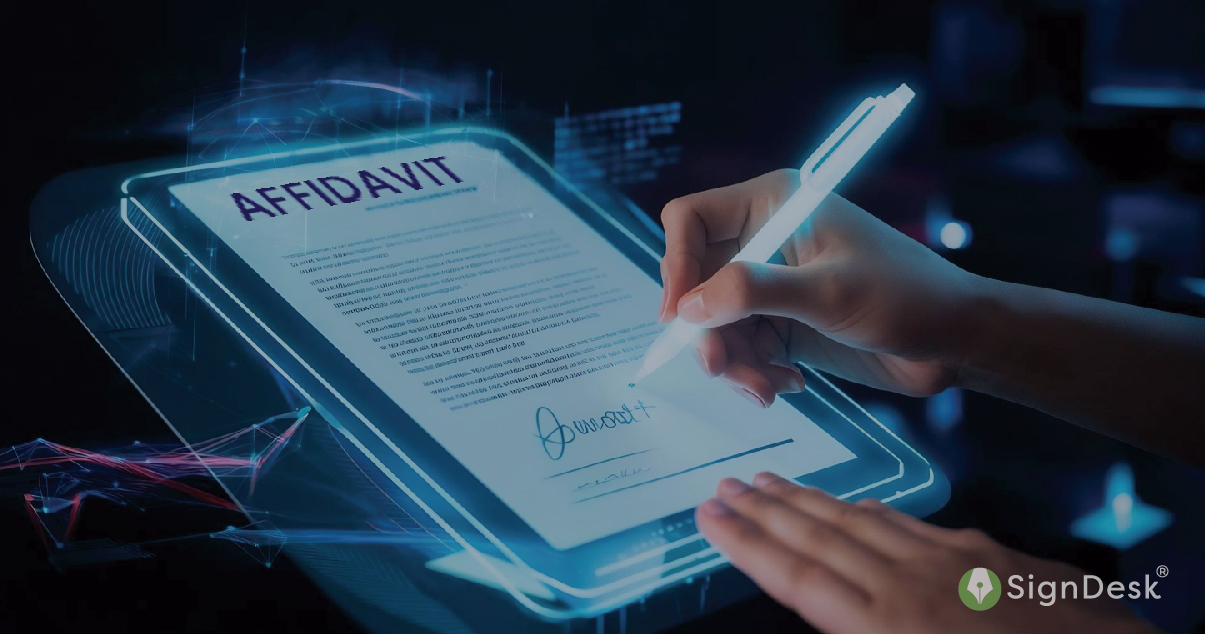

Despite rapid digitization across financial services, banking, and government systems, one document stubbornly sits outside the digital revolution: the affidavit.
Whether it’s proving your identity, submitting a name change, onboarding an employee, processing a loan, or filing a claim, affidavits remain a mandatory step in hundreds of everyday workflows. Yet the way they’re created hasn’t changed in decades.
And it’s no surprise that large volumes continue to rely on fully manual affidavit processes, using physical stamp paper and in-person notarization.
This outdated workflow creates:
- Delays that ripple across business operations
- Compliance risks due to errors, missing stamps, or invalid formats
- High operational effort for teams dealing with recurrent affidavits (HR, NBFCs, BFSI, insurance, legal ops)
- Poor customer experience, especially in banking and financial journeys
And as organizations race toward automation and paperless processes, affidavits remain one of the last-mile friction points blocking true digital transformation.
This is where intelligent platforms like Melento, with digital stamping, legally valid eSign, and automated CLM workflows, are reshaping how affidavits should work. Draft, stamp, sign, store, and verify – turning a multi-day process into a secure, compliant, end-to-end digital flow.
Before diving into digital processes, let’s start with the basics.
What Is an Affidavit?
|
An affidavit is a written, sworn statement of facts made voluntarily by an individual (the declarant or affiant). It is:
Affidavits are widely used in legal disputes, government filings, financial verification, HR processes, banking, insurance, and compliance workflows. |
Why Are Affidavits Used?
Affidavits are among the most widely used legal documents in India, yet also among the least understood. Over 60% of institutions (banks, NBFCs, insurers, and government departments) require affidavits as part of their verification and compliance processes.
Whether you’re onboarding a customer, processing a claim, or proving identity, affidavits provide formal, legally enforceable proof of facts. Here’s why:
1. Legal & Compliance: Verified Proof That Stands in Court
Affidavits serve as legally binding evidence, making them essential for:
- Presenting facts before courts, tribunals, and quasi-judicial bodies
- Supporting claims, petitions, and legal submissions
- Establishing the truthfulness of statements where accuracy is critical
Courts rely on affidavits because they carry higher evidentiary value than self-declarations, given the attestation by a notary or magistrate.
2. Business Use Cases: Faster Approvals, Lower Risk
Modern organizations, especially those in regulated sectors, use affidavits to reduce fraud, verify information, and meet compliance standards.
Every day, business use cases include:
- KYC & onboarding: Banks, NBFCs, HR teams
- Loan processing: Underwriting and sanction workflows
- Insurance: Claims, loss declarations, beneficiary confirmations
- Vendor onboarding & procurement: Authenticating credentials
- Dispute resolution: Verified statements that limit legal risk
Organizations adopting digital processes see a 66% reduction in verification delays.
3. Documentation & Regulatory Submissions
Affidavits also act as official proof for everyday documentation needs, such as:
- Identity or address confirmation
- Name change declarations
- Financial capability or asset statements
- Affidavit of support (e.g., visa applications)
- Relationship confirmations (spouse, parent, guardian, etc.)
Government departments increasingly prefer digitally signed affidavits for routine submissions, bringing speed and standardization.
|
Modernize Your Affidavit Workflow – Explore Melento’s AI-powered Solutions |
Key Elements of a Valid Affidavit And Why They Matter
Most affidavit rejections stem from missing details or improper attestation, making the difference between seamless approval and costly rework.
A legally valid affidavit must include:
1. Declarant’s Full Name & Personal Details
This confirms the identity of the individual making the sworn statement. Missing or incomplete personal details account for a significant chunk of documentation errors in onboarding and KYC processes.
2. Clear, Numbered Statement of Facts
Facts must be precise, easy to verify, and sequenced logically. Numbering ensures clarity and reduces disputes or misinterpretation, which are critical in legal and compliance-heavy workflows.
3. Voluntary Declaration Under Oath
Affidavits carry legal weight because the declarant confirms the truthfulness of the information. This clause acts as the foundation for validity in courts and regulatory submissions.
4. Signature of the Declarant
An unsigned affidavit is automatically considered invalid. Digital signatures (Aadhaar eSign/DSC) now account for 1.6x faster processing in banking and NBFC workflows.
5. Notary or Magistrate Seal & Attestation
An attestation converts a simple written statement into a legally enforceable affidavit. Missing seals are one of the top reasons for rejected submissions.
6. Date & Place of Execution
Regulatory bodies often require affidavits executed within a specific time frame or within a particular jurisdiction. Incorrect dates or execution locations can lead to rejection or repeat submissions.
|
Why Getting These Elements Right Is Critical Every missing detail increases: ❌ Processing delays ❌ Risk of rejection ❌ Compliance complexity ❌ Customer friction (for financial services & HR teams) |
|
In high-volume industries like banking, NBFCs, insurance, and HR, even a 5-10% error rate translates into thousands of hours lost annually.
|
Types of Affidavits, Most Common & Widely Used Across Sectors
Affidavits support millions of legal, financial, and administrative processes every year. They’re essential because they provide legally sworn, institution-ready proof of facts.
Here are the most widely used types of affidavits you’re likely to encounter:
|
Type of Affidavit |
What It’s Used For |
Where It’s Commonly Required |
|
Identity Affidavit |
To verify identity when supporting documents are missing or inconsistent |
KYC, background verification, correcting government records |
|
Address Affidavit |
To prove residence when address proof is unavailable |
Banks, telecom, HR onboarding, and colleges |
|
Name Change Affidavit |
For updating or correcting legal names |
UIDAI updates, passport, banks, and government records |
|
Financial Affidavit |
To declare income, assets, expenses, and liabilities | Court cases, settlements, and loan evaluations |
| Affidavit of Support |
To confirm financial backing for an applicant |
Visa, immigration, and embassy applications |
|
Business & Corporate Affidavits |
Company declarations, compliance commitments, and authorized signatories |
MSME filings, vendor onboarding, regulatory submissions |
|
Loan & Banking Affidavits |
Income declaration, property ownership, and non-encumbrance statements |
Banks, NBFCs, microfinance, insurance |
Affidavit Format: The Standard Structure You Should Always Follow
A clean, compliant structure ensures your affidavit is accepted the first time you submit it, whether to a bank, a court, a government office, or an internal compliance team. Below is the universally accepted affidavit format, designed to reduce rework and compliance risk.
1. Title (Clear, Specific & Legally Identifiable)
|
Your affidavit must start with a precise title, for example:
A clear title improves document traceability and aligns with institutional requirements. |
2. Affiant (Declarant) Details
|
This section identifies the person making the statement under oath. It typically includes:
A legal compliance survey showed that missing or incorrect personal details are among the top reasons affidavits get rejected, especially in banking and insurance workflows. |
3. Statement of Facts (Numbered for Clarity)
|
This is the heart of the affidavit, your factual claims. Write each fact as a separate numbered point to ensure clarity and avoid ambiguity. Example:
Structured numbering helps reviewers, courts, and auditors assess each statement without confusion. |
4. Oath Clause (Your Legal Declaration)
|
This clause affirms that: “The above statements are true to the best of my knowledge and belief.” This is what gives the affidavit its legal enforceability, making it admissible in courts, regulatory submissions, and financial processes. |
5. Signature of the Declarant
|
Your signature (physical or electronic) must be placed: Below the oath clause
Digital signing adoption worldwide is projected to reach $66.01 billion by 2032. This means organizations increasingly accept eSigned affidavits when properly stamped. |
6. Notary / Attestation Section
|
This includes:
This step turns your affidavit into a legally validated document. |
A well-structured affidavit reduces compliance delays, increases acceptance rate across institutions, prevents costly rework, speeds up onboarding, loan renewals, claims, and legal filings.
Affidavit vs Declaration: What’s the Difference & When Should You Use Each?
Now that you’ve seen the standard affidavit format, it’s equally important to understand whether you actually need an affidavit or if a simple declaration would suffice. Many businesses spend too much time and effort on affidavits when a declaration would be legally acceptable.
Affidavit vs Declaration: Key Differences
|
Aspect |
Affidavit |
Declaration |
|
Legal Status |
Higher enforceability in courts; often treated as sworn evidence |
Less formal; used for non-critical or internal affirmations |
|
Oath Required |
Yes, must be sworn under oath |
No oath required |
|
Attestation |
Requires a notary, magistrate, or oath commissioner |
Often self-attested; no external authority needed |
|
Use Cases |
Courts, regulators, banks, insurers, and compliance-heavy processes |
HR onboarding, internal forms, general statements, vendor onboarding |
When Should You Use Which?
Knowing the difference helps teams move faster without compromising legality.
|
Use an Affidavit When:
|
|
Use a Declaration When:
|
|
Choose the Right Document – Faster & Smarter |
How to Make an Affidavit (Step-by-Step)
After understanding how affidavits differ from declarations and why affidavits carry stronger legal enforceability, let’s look at how to make an affidavit. Despite being a simple document in theory, affidavits often become slow and error-prone due to paperwork, physical stamping, and manual notarization.
Here’s how you can create an affidavit from start to finish:
|
The 5-Step Affidavit Flow Draft Statement → Attach Evidence → Notary Attestation → Stamp Paper/eStamp → Store & Retrieve |
1. Draft the Affidavit with Accurate, Verifiable Facts
Write a clear, truthful statement of facts, preferably in numbered points. Ensure:</>
- No contradictions
- No ambiguous terms
- The language is professional and concise
Note: 1 in 3 affidavits submitted for legal or financial processes are rejected due to drafting errors or missing information.
2. Collect Supporting Documents
Attach copies of identity, address, financial statements, or any proof that substantiates your claims.
This helps:
- Strengthen the affidavit’s credibility
- Speed up scrutiny for banks, NBFCs, courts, or HR teams
3. Sign Before a Notary or Authorized Officer
Affidavits must be signed in front of:
- A Notary Public
- First Class Magistrate
- Oath Commissioner
- Gazetted Officer (in specific cases)
Your signature, combined with the authority’s seal and signature, makes the affidavit legally binding.
4. Apply Stamp Paper or eStamp (Depending on Regional Requirements)
Stamping validates the affidavit under the Indian Stamp Act and under the specific Acts of other countries worldwide. You can use:
- Physical stamp paper purchased from licensed vendors
- eStamp (In India, preferred and legally recognized across most states)
A digital trend: 3,000+ enterprises now prefer eStamp over physical stamps due to fraud prevention and easier compliance.
5. Record & Store Securely
Affidavits are often requested months or years later. Store them digitally, in an encrypted repository, with metadata for quick retrieval and tamper-proof logs, especially for regulated industries.
Can affidavits be created online? Yes, and they’re becoming mainstream. With the rapidly evolving digital world, mainly regulated industries are affected. eSign, eStamping, and automated workflows have made the entire affidavit process 100% digital, legally valid, and audit-traceable.
How Melento Transforms Affidavit Workflows With eSign, eStamp & CLM
Affidavits are mission-critical across industries such as banking, NBFCs, insurance, HR, legal, and public sector compliance. Melento fast-tracks the process by providing a secure, fully digital, end-to-end affidavit execution system powered by eSign, eStamp, and Contract Lifecycle Management (CLM Software).
Melento’s suite unifies drafting, stamping, signing, verification, and storage, turning multi-day processes into a few-minute digital workflows.
|
Melento eSign for Legally Valid Affidavit Execution Melento ensures affidavits are executed with full legal validity by supporting the most trusted signing standards. |
|
What you get:
|
|
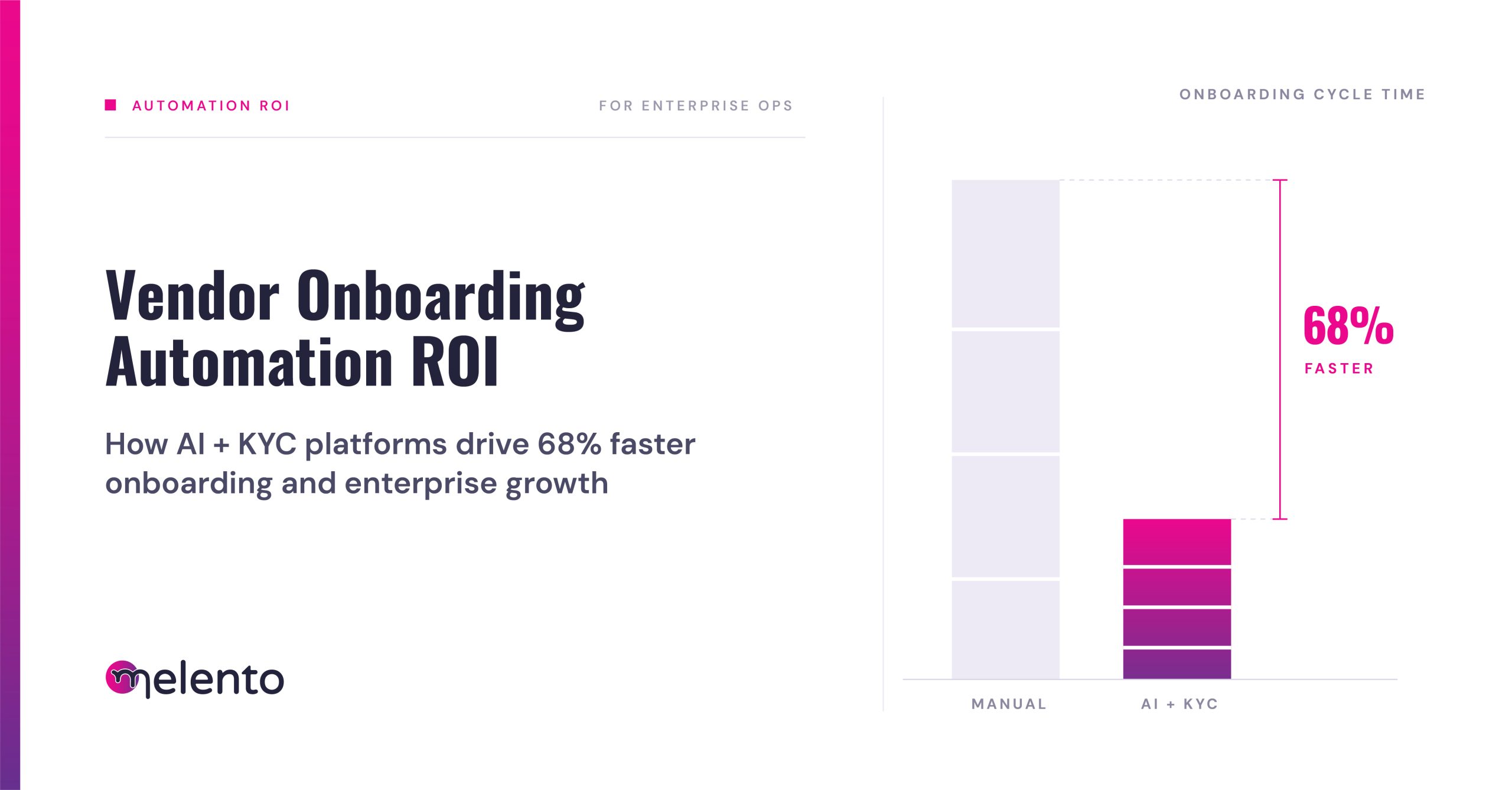
Organizations reduce affidavit turnaround times by 68%, enabling faster onboarding, loan disbursal, and compliance approvals. |
|
Melento eStamp for Seamless Digital Stamping Stamp duty compliance varies by state, and Melento simplifies it with automated, legally recognized digital stamping. |
|
What you get:
|
|
Digital stamping removes one of the biggest bottlenecks in affidavit preparation, reducing operational overhead by up to 70%.
|
|
Melento CLM for Affidavit Management & Workflow Automation Affidavits may be simple documents, but in financial and enterprise environments, they require standardized language, approvals, routing, and storage. Melento brings complete lifecycle control. |
|
What you get:
|
|
With Melento CLM, enterprises gain a unified system of record for all affidavit activity that is secure, searchable, and audit-ready – reducing overall TAT from 30 days to 15 minutes. |
Traditional vs Digital Affidavit Workflows
|
Aspect |
Traditional Affidavit Workflow |
Digital Affidavit Workflow |
|
Preparation |
Manual drafting, repeated data entry |
Automated templates |
|
Identity Verification |
Physical KYC, in-person checks |
eKYC, Aadhaar/eSign-based verification |
|
Execution |
Requires physical presence before the notary/authority |
Remote execution with digital stamping/eSign |
|
Stamp Duty |
Physical stamp paper procurement (vendor dependency) |
Instant digital stamping with automated denomination selection |
|
Turnaround Time |
1–3 days, depending on location and notary availability |
In a few minutes, end-to-end |
|
Error Rate |
High – manual input, multiple revisions |
Low – standardized digital templates, validation checks |
|
Document Handling |
Paper-based, risk of loss/damage |
Secure, encrypted, audit-tracked digital storage |
|
Cost |
High (travel, manual labour, printing, courier) |
54% Lower, digital, automated, no physical logistics |
|
Compliance & Audit |
Hard to track, dispersed physical records |
Real-time logs, tamper-proof audit trails |
|
Customer Experience |
Time-consuming, friction-heavy |
Seamless, mobile-first experience |
Melento consolidates affidavit creation, stamping, signing, governance, and storage into one seamlessly orchestrated workflow.
|
End-to-End Affidavit Digitization With Melento Draft → Review → eStamp → eSign → Store → Retrieve |
||
|---|---|---|
|
✅ 80% faster affidavit processing |
✅ Zero physical dependency |
✅ Full compliance & auditability |
Digitize affidavits instantly with Melento