
Across industries, onboarding is one of the first processes most organisations are attempting to digitise, and yet it remains among the most structurally inefficient within the enterprise.
Financial institutions have invested heavily in digital KYC. NBFCs integrate credit bureau APIs. Enterprises deploy document AI to extract data from invoices, IDs, and contracts. Portals replace paper forms. Dashboards track status in real time.
And still, onboarding remains slow, expensive, operationally fragile, and prone to compliance risk. This is not a technology adoption problem. It is an architectural one.
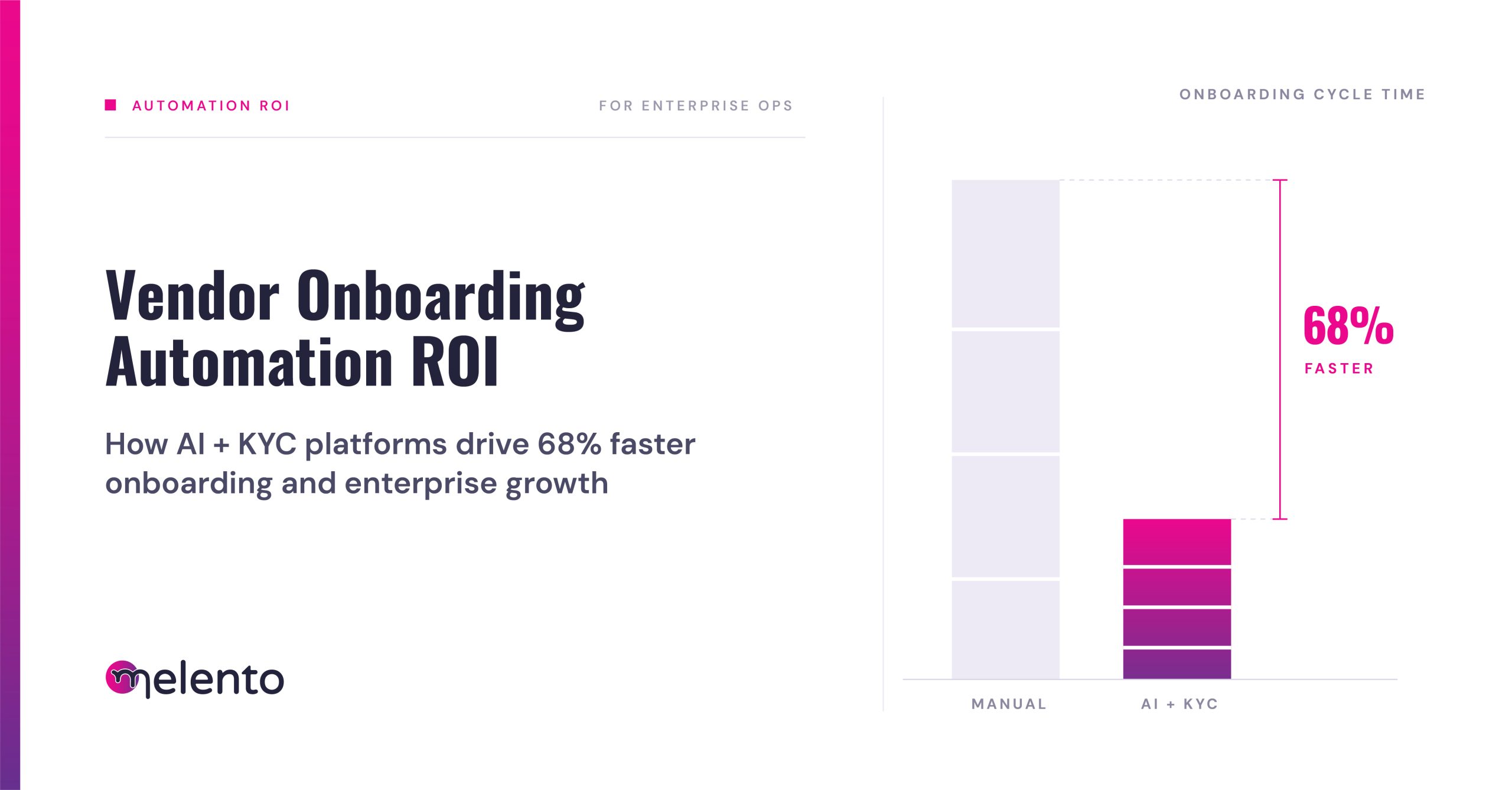
According to McKinsey, onboarding inefficiencies can increase processing costs in regulated industries by as much as 30–50 percent. Deloitte reports that up to one in five customers abandon financial onboarding journeys due to friction or delay. At the same time, regulatory scrutiny continues to intensify, increasing the operational burden of traceability and audit readiness.
The tools are digital. The outcomes remain inconsistent. The reason lies in how onboarding has been designed.
The Architecture of Fragmentation
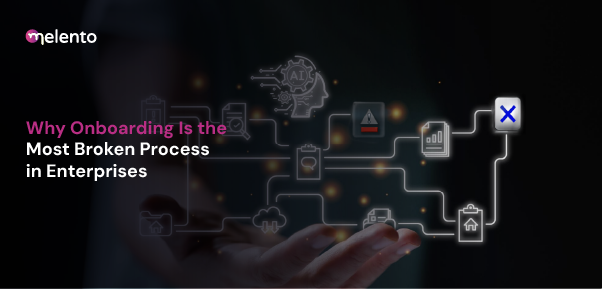
Onboarding spans multiple domains simultaneously: identity verification, compliance screening, risk assessment, credit evaluation, approvals, communication, and system activation. Each domain often sits on a different technological foundation.
- KYC vendors operate independently.
- Credit bureau integrations run through external APIs.
- Compliance teams rely on specialised screening systems.
- Operations track cases internally.
- Approvals circulate through separate portals or email chains.
Each component functions. What fails is coordination.
Digitalisation in many enterprises has meant replacing manual steps with digital equivalents, without rethinking the orchestration layer that connects them. The result is a chain of loosely integrated tools rather than a unified execution environment.
This fragmentation produces predictable consequences: limited cross-functional visibility, delayed exception handling, duplicated data entry, and manual overrides to reconcile inconsistencies.
In regulated sectors, these gaps are not merely inefficiencies; they introduce measurable operational and compliance risk.
The Limits of Document Intelligence
In response to these inefficiencies, many organisations have turned to AI – particularly document intelligence and OCR technologies.
Documents can now be parsed instantly. Identity proofs verified against databases. Invoices are classified and extracted with increasing accuracy.
These capabilities are valuable. But they address only one layer of the problem.
- OCR answers the question, “What information is contained in this document?”
- Onboarding requires answering, “What decision should follow from this information?”
- Should a loan above a certain value require dual approval?
- Does a risk score trigger enhanced due diligence?
- Should compliance review occur in parallel with credit assessment?
- Does an SLA breach require automated escalation?
- These are orchestration decisions – structured, conditional, and multi-actor in nature.
AI models excel at classification and extraction. They do not inherently govern process flow across stakeholders and systems. When deployed without architectural redesign, AI becomes an efficiency enhancer within isolated steps, not a transformer of the overall journey.
Industry experience reflects this pattern. Gartner has noted that while AI adoption in financial services is accelerating, value realisation frequently stalls at the integration and process redesign stage. The intelligence exists. The execution layer remains unchanged.
Onboarding as a Live Application
A deeper misconception lies in treating onboarding as background automation.
Traditional workflow tools are often designed to trigger events, move tasks, or send notifications. They automate sequences. But onboarding is not a background script. It is a live, multi-stakeholder application.
- Customers require transparency into application status
- Managers need consolidated approval queues
- Compliance officers demand complete audit trails
- Operations teams require structured case visibility
- Leadership expects reporting and risk analytics
When workflows operate independently of the user-facing application layer, enterprises create automation islands. Data resides in external databases. Reporting depends on additional BI tools. Stakeholders navigate multiple interfaces to complete a single journey.
The absence of a unified environment increases cognitive load and prolongs resolution cycles. It also complicates governance – particularly where regulatory accountability demands full traceability of decisions and actions.
The Case for Orchestrated Intelligence
What onboarding requires is not simply more automation, but orchestrated intelligence – a system in which agents, integrations, approvals, and human interventions operate within a governed, visual execution framework.
This is where platforms such as Melento’s MStream introduce structural change.
MStream approaches onboarding as a visual, low-code workflow application rather than a chain of background automations. Through an intuitive flow-based builder, enterprises can design complex onboarding journeys that include conditional branching, parallel reviews, multi-level approvals, and SLA-driven escalation paths.
Crucially, these workflows are not isolated scripts. They are embedded within Melento’s broader MWork platform, transforming them into fully interactive business applications.
Every onboarding flow becomes:
- A structured workspace with role-based access
- A real-time dashboard for operational oversight
- A consolidated approval queue
- A customer-facing portal for status visibility
- A native audit trail capturing every action
Rather than scattering data across external systems, workflow data is stored within a structured Smart Space, enabling built-in reporting, historical analysis, and compliance traceability.
Agents Within Governance
AI agents within MStream operate inside this governed architecture.
They can extract financial data from uploaded documents, validate identity information, classify submissions, and trigger risk assessments. HTTP and webhook integrations connect to external services such as credit bureaus, DigiLocker-based KYC systems, and core banking platforms. Conditional logic nodes determine routing based on thresholds and business rules. Parallel branches allow simultaneous compliance and risk reviews.
At the same time, MWork’s event-driven automation capabilities can send notifications, update systems, or escalate cases as statuses change.
In this model, agents provide cognitive capability. Workflows provide governance and structure. Together, they address the “last-mile” problem – the point at which information must translate into coordinated, compliant action.
From Digitisation to Design
The fundamental shift required in enterprise onboarding is architectural.
Digitisation replaces paper. Automation accelerates tasks. Intelligence extracts data. But only an orchestrated design transforms the system.
When onboarding is rebuilt as a unified, collaborative intelligence layer – combining agents, structured workflows, integrated approvals, and governed data – it becomes measurable, auditable, and optimisable.
- Conversion improves because friction reduces
- Operational costs decline as manual interventions fall
- Compliance confidence strengthens through structured traceability
- Time to revenue shortens
Onboarding, long treated as an operational burden, becomes a strategic lever.
The enterprises that recognise this distinction will not merely deploy more AI. They will redesign the execution architecture in which AI operates.
Until then, onboarding will remain the most digitised and most broken process in the enterprise.
And no amount of intelligence, deployed in isolation, will repair it.