
Are you confusing an agreement with a contract? Most teams still use the terms “agreement” and “contract” interchangeably, unaware of the legal and financial differences between them. While all contracts are agreements, not all agreements are contracts. Why?
Take the Taylor and Leo restaurant case. Taylor’s band performed at Leo’s restaurant based on a casual text message agreement. It lacked clear payment terms and consideration. This informal agreement was not legally enforceable. Had a contract been signed, Taylor could have demanded payment through legal channels.
This is the real-world impact of misunderstanding the difference.
An agreement becomes a contract only when all legal elements are fulfilled. Understanding the “agreement vs contract” is your first step toward clarity.
For CXOs and legal leaders, this distinction shapes enforceability, audit readiness, revenue assurance, and compliance risk. And here’s the bigger problem – legacy document tools won’t ensure enforceability. Businesses need AI-powered, compliant workflows that ensure every document is legally binding before execution.
As a RegTech pioneer, Melento ensures compliance throughout the contract lifecycle. Our platform enables over 3,000 enterprises to create secure, enforceable digital contracts at scale. Master Service Agreements, NDAs, MoUs—what’s binding? What’s not? This blog explains the legal and operational differences between agreements and contracts—so your next deal never ends up like Taylor’s.
Agreement vs Contract: Why Confusing an Agreement for a Contract Can Cripple Compliance
Business professionals can distinguish between agreements and contracts without needing legal assistance. Consider the following factors to differentiate an agreement from contract:
- Contracts are used for commercial purposes, whereas agreements are for personal purposes.
- Contracts are legally binding, while agreements may not necessarily be.
- Contracts are typically written, while agreements can be verbal or written.
- Contracts create legal obligations, while agreements may not.
- Contracts involve consideration (something of value), while agreements may not.
- Contracts are created to be legally bound, while agreements may not have this intention.
- Contracts are official and adhere to specific regulations, whereas agreements can be informal.
- Contracts are enforceable in court, while agreements may not be.
Agreement vs Contract:
What Is the Difference?
To further illustrate the distinctions between agreements and contracts, we have created a comprehensive comparison table: Agreement vs. Contract.
|
Feature |
Contract |
Agreement |
|
Formality |
Written document |
It can be verbal, informal, written, or implied |
|
Legality |
Yes, if all legal requirements are enforced |
Not necessarily |
|
Enforcement |
Enforceable in court |
Difficult to enforce in court unless documented |
|
Specificity |
Must include detailed description of rights, terms & conditions, responsibilities, consequences, and termination clauses |
General outline of terms |
|
Suitable for |
High-value transactions, complex arrangements, deals with new partners, situations where clear legal enforceability is crucial |
Low-risk situations, simple transactions with trusted partners, and circumstances where flexibility is needed |
|
Examples |
Employment contracts, property leases, purchase agreements, and non-disclosure agreements (NDAs) |
Handshake deals, email confirmations, verbal agreements for small purchases |
How an Agreement Becomes a Legally Binding Contract?
To transform agreements into legally enforceable contracts, specific elements must be present.
Under the Indian Contract Act, 1872, the key elements of a contract are –
✅ Offer: One party promises to perform or deliver something in the form of a written contract
✅ Acceptance: An unambiguous acceptance when the agreement is solidified.
✅ Awareness: Both parties acknowledge that the contract agreement exists.
✅ Consideration: Each party must receive something of value in return or exchange.
✅ Capacity: Both parties must be legally capable (age, mental capacity, and authority).
✅ Legality: Both parties must intend for the contract to be legally enforceable. It must not violate laws, public policy, or morality.
Additionally,
- Proper Stamping (Per State): Each state in India has its own stamping rules under the Indian Stamp Act, 1899. Incorrect or missing stamping can render the document inadmissible in court.
- Valid Signature: Can be wet ink, DSC, or Aadhaar-based eSign as per the IT Act, 2000. Digital signatures are fully valid in India and enforceable in court.
Court Admissibility Requires:
- Correct Stamping: Stamp duty must be paid digitally or physically as per state norms. Unstamped or under-stamped documents may be rejected in legal proceedings.
- Valid Digital Signature:
- Aadhaar eSign: Contracts are legally valid under Section 3A of the IT Act, 2000.
- Digital Signature Certificate (DSC): DSC certificates are issued by licensed Certifying Authorities; used for high-value B2B contracts.
When to Use Agreement vs Contract?
The decision to use a contract or an agreement depends on the nature of the partnership and the parties’ intentions.
Here is a general guideline on when to use an agreement vs a contract:
Use an agreement for:
- Collaborations based on trust and goodwill.
- Low-risk situations with low financial value.
- Situations where flexibility is important.
Contracts, on the other hand, are legally binding and provide clarity and protection against breaches. It makes them suitable for business transactions, employment agreements, master service agreements, franchisee agreements, leases, and other formal arrangements.
Use a contract for:
- High-value transactions or complex projects.
- Situations where clear expectations and legal recourse are necessary.
- Protecting intellectual property or confidential information.
Agreement vs Contract: What’s Legally Binding & What’s Not – A Document-Wise Breakdown
|
Document Type |
Legal Category |
Needs Stamping? |
Enforceable if eSigned? |
|
MoU |
Agreement |
Optional |
Sometimes, with conditions |
|
NDA |
Contract |
Often Optional |
✅Yes – Aadhaar eSign/DSC accepted |
|
Employment Offer Letter |
Agreement |
State-dependent |
✅ Yes – if properly signed |
|
Loan Agreement |
Contract |
✅ Mandatory |
✅ Yes – with valid eSign & stamp |
|
Procurement Terms |
Agreement |
Often optional |
Depends – enforceable if framed properly |
|
SLA/MSA (Service-Level/Master Service Agreement) |
Contract |
✅ Yes |
✅ Yes – common in enterprise ops |
What Are the Hidden Business Risks of Informal Agreements Instead of Contracts?
Many businesses rely on informal agreements, assuming they’re safe. But the hidden costs of skipping legal contracts can be massive—and avoidable.
- Agreements without stamping = Not admissible in court
Many informal agreements, like MoUs and email confirmations, lack official status. Under the Indian Stamp Act, 1899, unstamped documents are legally void. Courts reject them as evidence, even if both parties agreed verbally.
- No audit trail = Impossible to prove consent or intent
Without digital timestamps, IP logs, or verified signers, there’s no proof. This becomes a liability during litigation, audits, or investor scrutiny. Audit-readiness begins with a digital trail—not manual archives.
- Manual execution = 5–7 day delays per contract
Printing, couriering, signing, scanning, storing—it all adds up. Enterprises face delays in deal cycles, vendor onboarding issues, and missed SLAs. Time-sensitive sectors like BFSI and logistics lose crores every day due to lag.
- Regulatory exposure in BFSI, FinTech, Healthcare
Compliance-heavy sectors require contracts that are enforceable, trackable, and tamper-proof. Lack of legal contracts constitutes a violation of the RBI, IRDAI, SEBI, and HIPAA standards. You risk audits, penalties, or worse—revoked licenses.
- ₹9.3 Cr/year: The average cost of poor contract practices
Enterprises lose this annually due to disputes, missed revenue, and compliance gaps. In high-stakes industries, one unenforceable agreement can halt operations.
How Melento CLM Makes Every Agreement Enforceable
Trusted by 3000+ enterprises with a scalability to process 50M+ compliant contracts annually, Melento CLM automates compliant contract workflows.
✅ Legally Enforceable Template & Clause Library
Every template and clause on our CLM platform is pre-defined for enforceability by legal experts. A form builder can help streamline contract creation for businesses.
✅ Real-Time State-Wise Stamp Duty Application
Our integrated eStamping tool streamlines stamp duty payment with a master wallet. It helps enterprises to stay compliant with registration and stamp duty charges in an all-in-one platform.
✅ Built-In Aadhaar eSign & Digital Signature Certificate (DSC)
Secure, IT Act-compliant signatures—integrated seamlessly into your contract flow. Ideal for BFSI, FinTech, HR, and procurement teams.
✅ Automated Approval Routing, Alerts & Expiry Tracking
Automated workflows streamline tasks such as routing contracts for review and approval, sending reminders for contract renewals or terminations, and notifying stakeholders of key milestones.
✅ Audit Trails for Full Legal Compliance
CLM software facilitates collaborative contract authoring. Every signature, change, and action is logged and timestamped for accurate record-keeping. Meet audit, litigation, and regulatory demands with zero manual effort.
Why Melento is Trusted by Enterprises Like L’Oréal & TTK Prestige
Across sectors such as BFSI, retail, healthcare, and manufacturing, leaders rely on Melento CLM.
✅ ₹12,000 Cr+ worth of contracts processed via our CLM and stamping engine
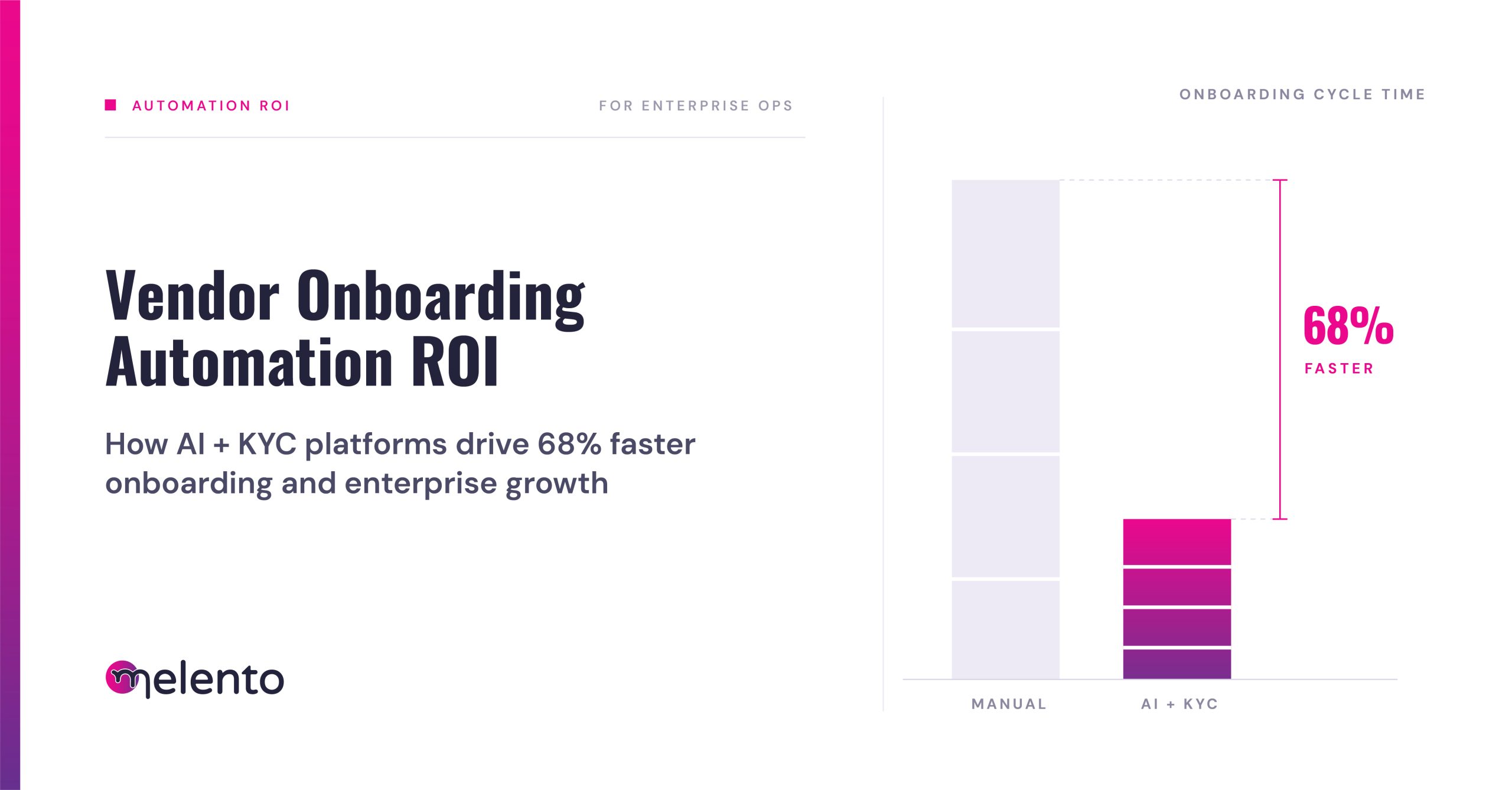
✅ 68% faster turnaround times
✅ 70% reduction in legal risk exposure
|
“Before Melento, our contract process was slow, manual, and disconnected—documents had to be printed, signed, scanned, or couriered, which caused major delays and high costs. Getting everyone aligned and available to sign was a constant challenge. With Melento’s CLM solution, we transformed everything – contract workflows are now fully digital, and turnaround times dropped from weeks to just minutes. It’s streamlined, collaborative, and efficient from start to finish.” –G. Ramesh Babu, Senior DGM – Legal, TTK Prestige |
Turn Every Agreement Into a Secure, Compliant Contract with Melento
Melento CLM helps you find clarity to create compliant contracts. From digitizing, stamping, and signing, to managing addendums and regulatory updates—CLM does it all.
By leveraging Melento CLM, organizations can –
✔️ Centralize your contracts
✔️ Automate compliance workflows
✔️ Slash TAT, reduce legal risk, and drive operational clarity
Incorporating CLM into your business operations not only enhances efficiency but also strengthens your ability to adapt to regulatory changes and mitigate risks.