
In 2025, businesses operate in a digital-first world, yet many still treat contracts as if it were 1995. While teams push toward automation, AI adoption, cloud transformation, and global expansion, many organizations still manage contracts through email chains, untracked Word files, manual approvals, and physical signatures.
That outdated approach hurts more than efficiency. It slows revenue, increases compliance risk, frustrates teams, and creates data blind spots across the entire business.
And the numbers prove it:
- 71% of companies say contract delays directly impact revenue realization (Melento Contract Automation Report 2024 ).
- 58% report losing visibility after contracts are executed, leading to missed obligations and audit risks.
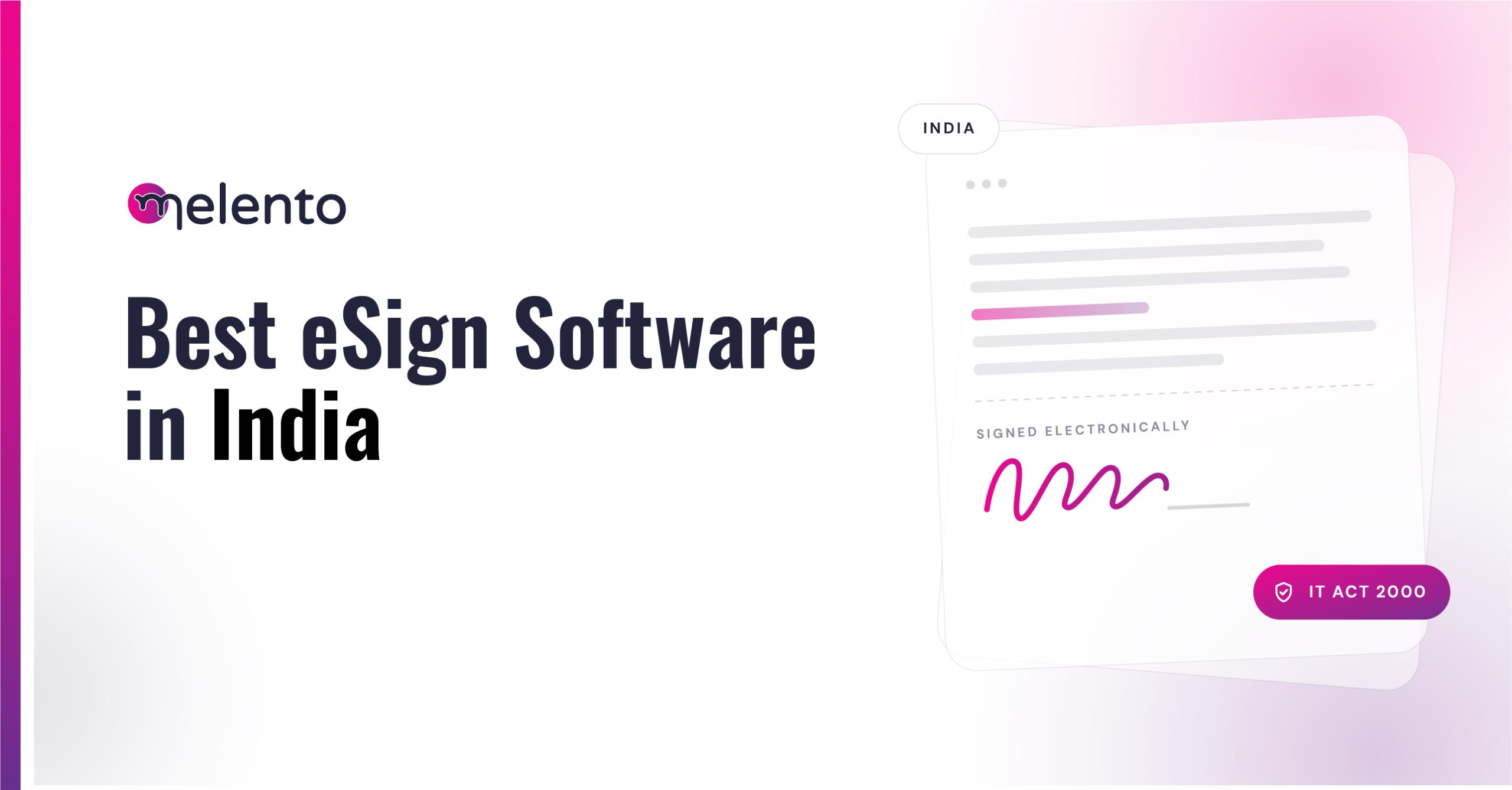
- E-signatures are now legally recognized across major global jurisdictions, including the IT Act (India), ESIGN (US), and eIDAS (EU).
- In Melento’s study, 61% of enterprises admitted to compliance deviations caused by manual drafting or uncontrolled templates.
The message is clear: if your contract is slow, scattered, or manual, your business will be too.
That’s why digital contracting and e-Contract execution are now mission-critical. And platforms like Melento are helping modern teams move from reactive, manual workflows to AI-powered, fully automated, audit-ready contracting ecosystems.
Suppose you’re wondering what really matters in the world of e-contracts, legality, enforceability, security, compliance, signing methods, and data visibility. In that case, this guide breaks it all down in simple, actionable insights.
Part 1: 10 General Things You Must Know About E-Contracts (Backed by Data & Real Business Impact)
The shift to electronic contracting isn’t just a trend; it’s fast becoming a global business standard. According to Melento’s 2024 Digital Contracts Benchmark Report, 89% of Indian enterprises now prefer digital execution over manual contracting, and 74% say e-contracts have directly accelerated revenue cycles.
Here’s what every business leader, legal team, and operations head should know today:
|
E-Contracts Are Fully Legal Under the IT Act & Global Laws |
|---|
|
What this means: Properly executed e-contracts are enforceable under India’s IT Act, the ESIGN Act (US), and eIDAS (EU). Legality is now about how you manage (authenticity, audit trail, retention), not if electronic contracts are valid. Business impact: Use legally compliant signing methods, and you remove a significant barrier to digitization. Action step: Review your signing stack (OTP, Aadhaar eSign, DSC) and align it to jurisdictional requirements. |
|
E-Signatures Are Legally Enforceable |
|---|
|
What this means: OTP-based signatures, Aadhaar eSign, and DSCs are accepted as valid signatures when executed under compliant processes and captured evidence. Business impact: You can confidently replace wet signatures with digital signatures for most workflows, accelerating sign-offs. Melento’s survey found 43% adoption of e-signatures; adoption is proven, but a broader rollout is still needed. Action step: Start with high-volume, low-risk documents (NDAs, offer letters) to scale eSign usage. |
|
Digital Documentation Reduces Manual Errors |
|---|
|
What this means: Standardized templates, clause libraries, and metadata reduce duplication, inconsistent clauses, and missing attachments. Business impact: Fewer version conflicts, fewer redlines, and less time wasted in reconciliation. Legal teams in a survey cited time efficiency (86%) as a top driver for digitization. Action step: Create a small clause library for your most recurring contract types and standardize templates. |
|
Audit Trails Enhance Accountability |
|---|
|
What this means: Every read, edit, approval, and signature is timestamped and stored, creating an immutable chain of who did what and when. Business impact: Faster dispute resolution, easier audits, and more unmistakable regulatory evidence. This is essential for industries like BFSI, where the survey shows 75% CLM adoption – governance matters. Action step: Ensure your platform captures the signer’s IP address, timestamps, and action history for every executed document. |
|
Faster Turnaround Than Paper Agreements |
|---|
|
What this means: Removing printing, postage, and manual routing dramatically reduces contract cycle times. The majority of organisations experience reduced turnaround times after digitisation. Business impact: Faster onboarding, faster revenue recognition, and quicker project kickoffs. Action step: Measure the current average TAT and pilot eSign and template use for a high-volume contract type. |
|
Multi-Factor Authentication Makes Agreements Secure |
|---|
|
What this means: Using OTPs, secure links, biometrics, or DSCs ensures signer identity and reduces repudiation risk. The survey highlights security and regulatory concerns as a barrier for 57% of teams still offline. Business impact: Reduced fraud risk and stronger compliance posture, which is necessary for KYC, finance, and high-value agreements. Action step: Implement MFA for any agreement touching PII, finance, or regulatory controls. |
|
Better Collaboration Through Digital Review |
|---|
|
What this means: In-platform comments, compare/merge redlines, and shared templates let legal, procurement, and business teams collaborate in real time. Our research shows 74% of teams want tools for auto-drafting and smart reminders, making collaboration a core need. Business impact: Faster negotiation cycles and fewer parallel document versions. Action step: Replace email redlines for one contract type and run a side-by-side time comparison. |
|
Easy Searchability Saves Hours of Time |
|---|
|
What this means: Indexed metadata (parties, dates, payment terms, SLAs) lets users pull up clauses, renewal dates, or obligations in seconds. Moreover, centralisation improves audit preparedness for enterprises. Business impact: Legal ops and procurement stop wasting time hunting for contracts and can proactively manage renewals and obligations. Action step: Tag existing high-value contracts with metadata fields (expiry, SLA, auto-renew). |
|
Centralized Storage Improves Compliance |
|---|
|
What this means: A single, governed repository with role-based access, retention policies, and backup reduces compliance gaps and strengthens governance. Only 18% of organisations have full CLM adoption – centralisation is still the missing link. Business impact: Reduced legal risk, easier audit responses, and consistent retention practices. Action step: Consolidate the top hundred contracts into a secure repository and enable role-based access. |
|
E-Contracts Reduce Costs Significantly |
|---|
|
What this means: Eliminate printing, scanning, postage, manual filing, and rework. Combine faster TAT with less admin work, and you get measurable cost savings. Business impact: Lower operational overhead and faster ROI on legal and procurement teams. Action step: Run a 90-day cost baseline (printing, courier, and admin hours) to benchmark post-CLM savings. |
Why This Matters Now
Melento’s Beyond the Signature report (500+ legal heads) shows:
- 82% of legal teams still rely on manual processes.
- 43% use e-signatures, but only 18% have complete CLM softwares.
- 74% of teams are keen to adopt automation for drafting, risk flagging, and reminders.
That’s a clear mandate: the toolkit exists, the desire is strong, but execution lags, and that gap creates real risk and forgone efficiency.
If you’re among the teams desiring to transform your contracts but stuck at the execution phase, Melento CLM brings you the platform that you’ve been looking for.
Part 2: 10 Things About E-Contracts from Melento’s POV
When you choose a modern eContract platform like Melento, you’re building a smart, secure, scalable contracting infrastructure that supports your business at high velocity, with compliance, control, and clarity baked in.
Here are 10 ways Melento delivers this.
- E-Contracts Built on Legally Compliant Digital Documentation
With Melento, every contract, whether an NDA, SLA, vendor agreement, or service contract, is rooted in legally valid digital documentation. The platform supports secure electronic and video-signature workflows, ensuring contracts can be executed remotely without compromising legal validity. This means your agreements stay enforceable under relevant digital-signature laws, even when signatories are spread across cities or countries.
- Multiple Legally Recognized Execution Methods Supported
Melento doesn’t force a one-size-fits-all signing method. Instead, it supports a range of legally recognized execution modes, from standard electronic signatures (OTP-based or OTP-less) to Aadhaar eSign, DSC-based digital signatures, and even SMS-based Aadhaar eSign for users without email. This flexibility ensures that, regardless of jurisdiction or user convenience, signatures remain valid and compliant, and the execution process remains as smooth as possible.
- AI Auto-Extracts Critical Metadata for Digital Contracts
After drafting or uploading a contract, Melento uses AI to automatically extract essential metadata – parties, dates, contract type, renewal terms, key obligations, and clauses. This eliminates manual data entry, reduces human error, and ensures every contract is consistently tagged and structured. For teams managing hundreds or thousands of agreements, this makes tracking, searching, and reporting far easier and far safer.
- Automated Playbooks for Instant Risk Review & Compliance
Melento’s AI-powered “playbooks” scan every contract against organizational rules and compliance norms. If there are any deviations, like missing compliance clauses, ambiguous terms, or non-standard provisions, the platform flags them and assigns a risk score. This lets legal and compliance teams catch issues before a contract goes live, drastically reducing risk and ensuring consistency across all agreements.
- Centralized Drafting with MS Word Sync for Familiar Workflows
Drafting contracts doesn’t force you out of familiar tools. With MS Word sync, you can draft directly in Word or upload existing drafts and seamlessly sync them with Melento. This bidirectional sync preserves governance, version control, and clause-library integrity while allowing teams to continue using the tools they already know. This greatly reduces friction in adoption and accelerates contract creation.
- Post-Execution Milestone & Obligation Tracking
Signing a contract is just the start. Melento enables defining key milestones, obligations, event-based triggers, and recurring tasks post-execution. Automated reminders and escalations ensure teams never miss renewals, deliverables, or compliance dates, even when managing hundreds of contracts. This reduces the risk of missed deadlines or contractual penalties, giving operations and legal teams peace of mind.
- Continuous Security, Audit Trails & Strong Authentication Controls
Security is foundational. Melento enforces multi-factor authentication, tracks and records every edit, signature, and timestamp, and ensures that even OTP-based eSigns expire after controlled intervals. This means every change is logged, every execution is traceable, and unauthorized edits are impossible, essential for regulated industries or compliance-heavy agreements.
- AI-Powered Legacy Contract Digitization – No CSVs Required
Many organizations struggle with legacy contracts, old, scattered PDFs, and paper files. With Melento, you can bulk upload these documents and let AI automatically extract metadata, categorize them, and make them searchable in the central repository. This converts legacy chaos into structured, accessible digital records – a massive win for audits, compliance, and retrieval.
- Secure Central Repository with Bulk Downloading & Role-Based Access
Once contracts are digitized, they need to be stored securely yet remain accessible to relevant stakeholders. Melento provides role-based access control, secure cloud storage (or SFTP), and the ability to bulk-download up to 50 agreements at once, all while preserving full audit trails. This ensures that sensitive corporate documents remain protected while still being retrievable on demand, even across teams and geographies.
- AI Assistant for Instant Contract Insights
Finally, Melento includes a built-in AI assistant that lets users query contracts in plain language, for example: “When does this Agreement expire?” or “What is the liability clause?” This turns contracts from static PDFs into interactive, actionable assets. Teams get instant clarity, accelerate decisions, and reduce legal back-and-forth.
Make your contracts work for you, not the other way around.
How Melento Helps With the Entire eContract Journey
Melento unifies the entire digital contracting lifecycle, from creation to compliance, into one AI-powered workflow. Here’s how each Melento module delivers end-to-end value.
|
1. Melento eSign: Fast, Compliant, Multi-Mode Digital Execution |
|---|
|
When speed and compliance matter, Melento eSign ensures contracts are executed securely and without friction. Designed for modern enterprises, it supports all primary legally recognized signing methods in India, the U.S., the UAE, and across Latin America. |
|
What It Supports
|
|
Why It Matters
|
CTA: Explore eSign workflows
|
2. Melento eStamp: Real-Time, Tamper-Proof Digital Stamping |
|---|
|
Stamping is often the slowest step in contract execution, requiring physical stamp paper, vendor coordination, and manual validation. Melento Digital Stamping eliminates all of that with fully digital, automated stamping. |
|
What It Supports
|
|
Why It Matters
|
See how eStamp works
| 3. Melento CLM: Create, Review, Execute & Manage Contracts in One Platform |
|---|
|
This is where Melento truly shines. While most tools stop at e-signing, Melento CLM manages the entire contract lifecycle with AI-driven accuracy. |
|
What It Supports
AI Playbook Review
Execution & Intelligence
Repository & Lifecycle Management
|
|
Why It Matters
|
Melento delivers all of this on a single unified platform – giving businesses complete visibility across every agreement.
Bottom line being, eContracts Aren’t the Future – They’re the Standard! If you want contracts that move at the speed of your business, Melento is built for you.