
A BFSI Perspective on Complexity, Compliance and Control
Customer onboarding in financial services has never been simple. But at scale, simplicity disappears entirely.
When a lender processes a few hundred applications a month, inefficiencies remain tolerable. When that volume scales into thousands – across products, geographies, and risk categories – fragility becomes systemic. Delays multiply. Exceptions surge. Compliance exposure rises. Customer drop-offs increase.
Despite widespread digitisation, onboarding remains one of the most operationally complex processes inside BFSI institutions. The issue is not a lack of technology; it is a lack of orchestration.
Scale Changes the Nature of Onboarding
At high volume, onboarding is no longer about form submission. It becomes a decision-routing system. A modern onboarding journey typically involves:
- Identity verification through social security numbers
- PAN and address validation
- Bank account verification via penny-drop APIs
- Credit bureau integration
- Risk scoring and policy checks
- Multi-tier approval hierarchies
- Compliance screening
- Core banking activation
- Real-time customer notifications
Each step may be automated individually. The challenge lies in coordinating them under regulatory scrutiny and SLA pressure.
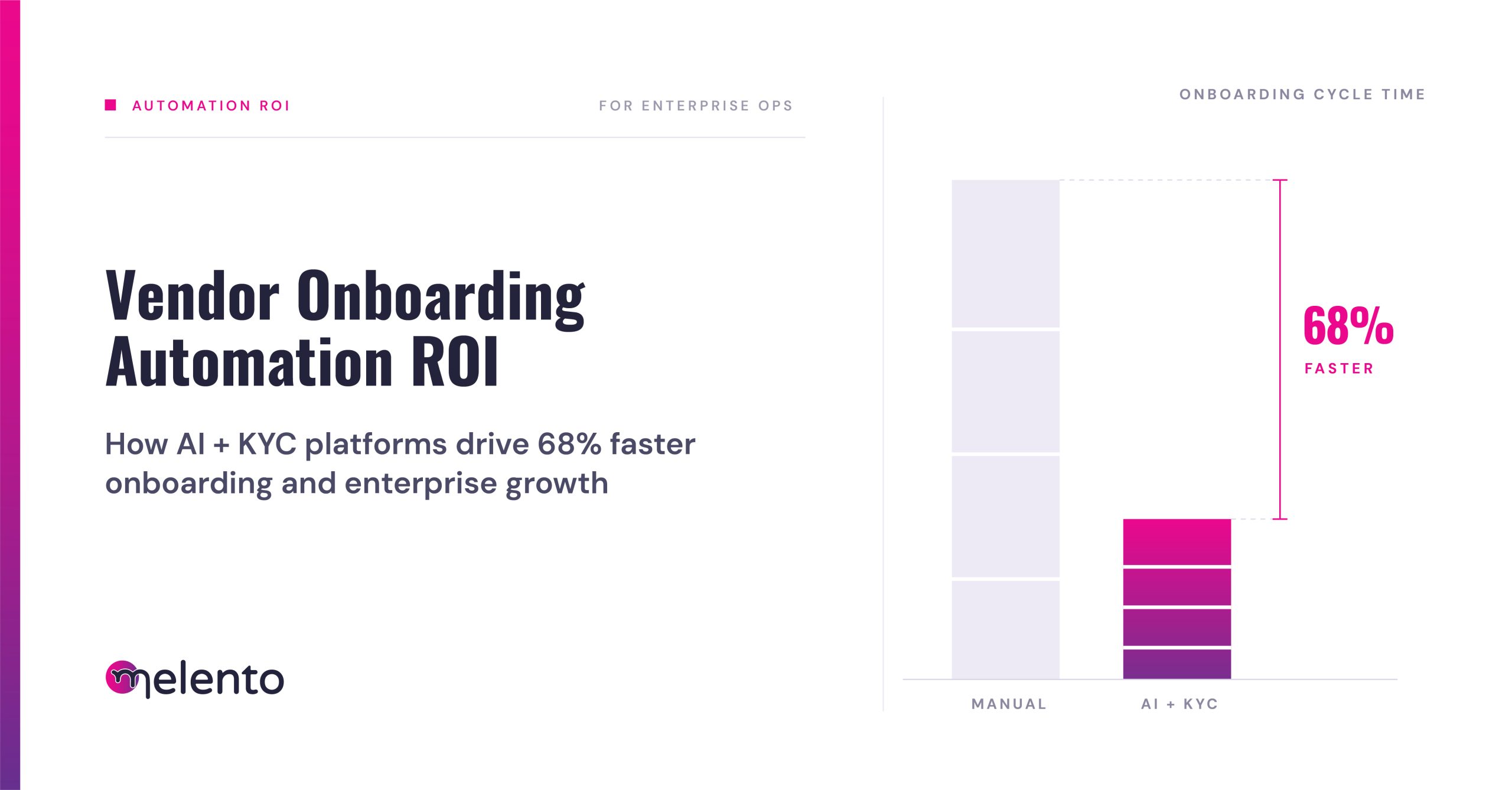
Industry research reflects the strain. Studies indicate that onboarding inefficiencies can increase operational costs by up to 30–50% in regulated sectors. Drop-off rates during digital onboarding journeys can exceed 15–20% when processes stall or lack transparency. Meanwhile, regulatory audits demand full traceability of every decision.
In BFSI, onboarding is not merely a customer acquisition function. It is a compliance-sensitive operating system.
Complexity Multiplies Across Products and Risk Tiers
Large financial institutions rarely operate a single onboarding flow. Different products carry different risk thresholds. Ticket sizes influence approval hierarchies. Geographic considerations introduce additional compliance checks. Edge cases require exception handling.
At scale, onboarding must handle:
- Conditional routing based on credit score
- Escalation for high-value loans
- Parallel compliance and risk reviews
- Automated rejection or pause flows
- Re-verification loops for incomplete documentation
This level of logic cannot be managed through static forms or isolated automation scripts. It requires a structured workflow layer capable of conditional branching, parallel processing, and dynamic decision-making.
This is where MStream by Melento addresses the architectural gap.
Designing Onboarding as a Visual, Governed Workflow
MStream enables enterprises to design onboarding journeys through a visual, low-code workflow builder. Rather than hard-coding logic or relying on disconnected tools, institutions can map their policies directly into structured flows.
Conditional nodes such as If and Switch Case handle risk-based routing. Split nodes allow compliance and credit assessment to run in parallel. Loop nodes manage repeated validation across multiple documents. Custom logic blocks execute product-specific business rules.
Approval nodes automatically route applications through multi-level hierarchies based on thresholds. Assignment nodes ensure accountability at each stage.
Crucially, these workflows are not abstract diagrams. They are executable systems embedded within Melento’s MWork platform, transforming onboarding from fragmented automation into a unified application environment.
Workflow Meets Application: Visibility at Scale
One of the most persistent weaknesses in enterprise onboarding systems is the absence of shared visibility.
Traditional workflow tools automate processes in the background. They move tasks, but they do not create a coherent user experience.
At scale, onboarding demands transparency:
- Customers require real-time status tracking.
- Loan officers need consolidated queues.
- Compliance teams require structured case views.
- Managers need visibility into pending approvals.
MStream, integrated with MWork, ensures that every onboarding workflow automatically becomes a fully functional business application.
Users access dashboard views in list or Kanban formats. Managers review pending approvals in centralised queues. Stakeholders collaborate through contextual commenting within applications. Stage visualisation provides clear progress indicators. Role-based access ensures controlled visibility. Every action is logged through an automatic audit trail.
For customers, branded portals provide transparency into application status, reducing inbound queries and increasing trust.
In high-volume environments, this shared visibility materially reduces operational friction.
API Choreography in Modern BFSI
Customer onboarding today is deeply interwoven with external systems. KYC verification integrates with DigiLocker. Credit bureau data flows through APIs. Bank verification relies on real-time penny-drop checks. Core banking systems require activation updates.
MStream’s HTTP and Webhook nodes allow seamless integration with these external services. Data can be pulled, validated, and written back into core systems without manual intervention.
Importantly, these integrations operate within structured workflows. API responses influence conditional logic, routing decisions, and approval paths. The result is not merely connected systems, but coordinated execution.
Compliance and Audit Readiness by Design
In regulated sectors, speed without traceability is a liability.
Audit preparation often exposes weaknesses in fragmented onboarding systems. Approval records may sit in emails. Document versions may lack a structured history. Policy-based decisions may be difficult to reconstruct.
MStream addresses this by treating data as a first-class citizen.
Through the MWork Smart Space, every form submission, API interaction, approval decision, and status update is automatically structured and stored. Native reporting capabilities enable institutions to track SLA adherence, conversion rates, and exception patterns without exporting data into separate BI systems.
Historical analysis becomes straightforward. Evidence collection and review workflows can be embedded directly within the onboarding journey. Every stage change is recorded, creating defensible audit trails.
Compliance shifts from reactive reconstruction to proactive governance.
Dual Automation for Speed and Control
Scalable onboarding requires both structured progression and reactive responsiveness.
MStream manages sequential workflow orchestration – the structured path from submission to activation. In parallel, MWork’s event-driven automation rules trigger notifications, update external systems, escalate SLA breaches, and flag high-value applications for priority review.
For example, when an application’s status changes, automated rules can send SMS updates, refresh credit score data, or notify compliance officers instantly.
This dual automation capability enables speed without sacrificing control.
Lessons from Large-Volume Enterprises
Institutions that successfully scale onboarding share common characteristics:
- They design for exceptions, not just ideal flows.
- They embed compliance logic directly into workflows.
- They treat data as infrastructure, not a by-product.
- They ensure visibility across stakeholders.
- They integrate AI agents within governed execution frameworks.
MStream embodies these principles.
By combining visual workflow orchestration, embedded AI processing, integrated approvals, structured data storage, and real-time collaboration, it provides a reference architecture for scalable BFSI onboarding.
From Process to Infrastructure
At low volumes, onboarding can survive inefficiency. At scale, it cannot. Customer onboarding in BFSI must function as a regulated infrastructure – balancing speed, complexity, and audit readiness simultaneously.
Digitisation alone is insufficient. AI alone is insufficient. Automation alone is insufficient.
What scale demands is orchestrated intelligence: a system in which policy translates directly into executable logic, stakeholders operate within a unified environment, and every decision is structured, visible, and defensible.
MStream by Melento addresses this need not by adding another tool to the stack, but by redesigning the stack itself.
For large-volume enterprises, that architectural shift is no longer optional. It is foundational.