
In 2023, a high-value property deal between two Indian conglomerates fell apart. The reason? An incorrectly stamped agreement delayed execution by 14 days. By then, the buyer had walked. ₹200 Cr lost.
What’s protecting your high-stakes contracts from the same fate? One invalid stamp paper can void an entire agreement and cost you 10x in penalties. Manual stamping isn’t just outdated; it’s legally risky and impossible to scale. Yet many enterprises still rely on franking or physical stamp paper for mission-critical agreements.
What if your next audit flagged 500 invalid contracts? In a world moving at digital speed, can you afford to lag? Let’s de-risk your deals before the next audit hits. Top enterprises are moving to digital stamping platforms like Melento. It’s compliant, real-time, and built for audit-readiness at scale. With Melento, CXOs cut stamping time by 68% and achieve 100% compliance.
This guide outlines all the legal methods for paying stamp duty. You will discover why digital stamping is the only method designed for scalability.
Before the Signature: Why It’s the Invisible Layer of Legal Protection for Every Contract?
Stamp duty isn’t just a tax; it’s your contract’s legal shield. The Indian Stamp Act, 1899, governs stamp duty in India.
But here’s the challenge:
Stamping rules, rates, and penalties vary state by state, making compliance complex at scale for pan-India enterprises.
Here’s why CXOs must prioritize stamping compliance before a single signature is inked:
- Legal Validation = Enforceability
- Stamped documents are legally enforceable in Indian courts.
- A correctly stamped document is admissible as evidence in dispute resolution.
- Without stamp duty, even watertight contracts can be rendered invalid.
- Revenue Implications for State Governments
- Stamp duty contributes ₹1.6–2.5 lakh crore annually to state revenues.
- States rely on accurate stamp duty collections for infrastructure and governance.
- Each compliant transaction supports state-led development and legal infrastructure.
- Non-Compliance = Penalties + Delays + Lost Revenue
- Penalties up to 10 times the deficient duty under Section 35 of the Indian Stamp Act.
- Contracts may be frozen until proper duty is paid, which can delay business outcomes.
- Non-compliance can trigger audit flags, reputational damage, and legal liability.
Stamp duty ensures enforceability, but getting it wrong can lead to costly delays. And that’s where most enterprises struggle.
Is your contract legally vetted & compliant? Find out.
Book a Free Consultation Today!
Why Forward-Thinking Leaders Are Switching From Paper to Digital Platform?
Imagine slashing turnaround time from 3 days to 3 minutes. That’s not wishful thinking, it’s what digital stamping delivers today.
Traditional Stamping Is a Drag on Enterprise Agility
- Document Backlogs Delay Revenue Recognition Manual stamping creates queues in onboarding, financing, and asset transfers.
- Operational Overheads Multiply Across Locations Every branch manually tracking stamp paper or franking slots = inefficient scale.
- Audit Trails Are Fragmented or Nonexistent Missing stamps, unclear dates, and unverifiable logs become audit nightmares.
- Contract Execution Gets Delayed A contract can’t be enforced or even executed without a valid stamp duty.
In traditional systems, a single document delay can result in millions of dollars in opportunity costs. Let’s break down your current options and see what’s really built for growth.
How India Pays Stamp Duty: 10 Legal Methods, 1 Digital Future
Let’s delve into the various individual ways in which stamp duty can be paid.
|
Method |
Speed/TAT |
Risk Level |
Enterprise-Suitable? |
|
1–2 days |
High |
❌ |
|
Instant |
Low |
✅ ✅ ✅ |
|
1–3 days |
Medium |
⚠️ |
|
Instant |
High |
❌ |
|
1–2 days |
High |
❌ |
|
Instant |
Medium |
⚠️ |
|
1–2 days |
High |
❌ |
|
N/A |
Extreme |
❌ |
|
Same-day |
Medium |
⚠️ |
|
1–2 hours |
Low |
⚠️ (Maharashtra only) |
Every method of paying stamp duty is legal, but not all are scalable, fast, or compliant enough for enterprise operations.
Here are the five most commonly used stamping methods. Discover the optimal approach for managing enterprise workflows.
1. Non-Judicial Stamp Paper
Non-judicial stamp paper can be purchased by visiting and purchasing stamp paper from any licensed stamp vendor.
❌ Prone to fraud, manual errors, and no digital trail. Hard to audit, harder to scale. Creates paper dependency across teams.

2. Franking
Franking involves impressing an instrument with a red mark (including the postage amount) using government-authorized automated franking machines.
❌ Capacity bottlenecks, franking slot unavailability, manual queueing. Not reliable across locations. SLA risks in high-volume workflows.

3.eSBTR (Electronic Secure Bank & Treasury Receipt)
eSBTR is a method of stamp duty payment where the transaction details are entered into an online database, and an e-challan is generated. This e-challan can be used as proof of stamp duty payment.
❌ State-restricted (Maharashtra), dependency on bank branches. Digitized but fragmented—can’t support pan-India use cases.

4. GRAS (e-Challan System)
GRAS (Government Receipts Accounts System) is a system designed to generate online revenue from various government departments. GRAS requires users to fill in details on the official GRAS website, generate an e-challan, and pay the requisite fees through a NetBanking account with a select list of banks.
❌ Manual form-filling, fragmented portals, lack of workflow integration. Too complex for contract workflows or bulk stamping.

The Problem With Legacy Stamp Duty Methods? They’re Not Built for Scale.
Although traditional stamp duty payment methods are legally valid, they are slow, fragmented, and difficult to standardize across different locations.
💡What modern businesses need is a secure, real-time, and audit-friendly stamping process that doesn’t depend on paper queues or outdated portals.
5. e-Stamping (SHCIL-based) – The Smart & Scalable Way to Pay Stamp Duty
E-stamping is a streamlined and quick digital process that generates non-judicial e-stamp paper in minutes. The e-stamping facility falls under the purview of SHCIL, which provides an online platform for paying stamp duty. It procures a unique e-stamp certificate as proof of stamp duty payment.
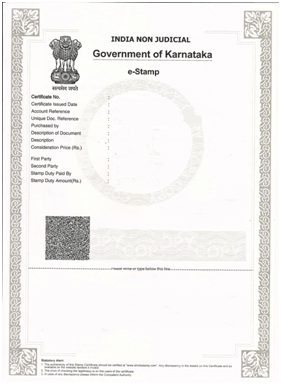
📊 Melento provides real-time e-stamping in 25+ states & UTs via SHCIL integrations. Fully API-based. Integrated with eSign, eNACH & contract workflows aided by AI-backed CLM software .
Operating Across India? Melento automates stamping across 25+ States & UTs.
Traditional vs Digital Stamp Duty Payment
|
Method |
Turnaround Time (TAT) |
Scalability |
Legal Validity |
Risk Factor |
|
Non-Judicial Stamp Paper |
2-5 days |
Low |
High |
High |
|
Franking |
3-5 days |
Medium |
High |
Medium |
|
eSBTR / GRAS |
1–2 days |
Medium |
High |
Medium |
|
e-Stamping (Digital) |
<15 mins |
High |
High |
Low |
Obsolete But Common: Traditional Stamp Types That Risk Compliance Daily
But what about other lesser-known stamping formats still used across departments? These too pose silent risks.
- Revenue Stamps
Revenue stamps are adhesive stamps used to record financial transactions or exchanges.
These stamps are used as receipts for monetary payments and are integral to collecting taxes on documents, licenses, and other items.

👉 Manual dependency, not suitable for high-value contracts. Strictly small cash receipt usage. Not applicable to enterprise use cases. Better replaced with integrated digital stamping on receipts.
- Judicial Stamp Paper
Judicial stamps are a category of impressed stamps used to indicate transactions with the judiciary.
These transactions typically involve fines, fees, or penalties in civil and criminal courts.

👉 N.B.: Stamp duty paid without judicial stamp paper is paid under the Court Fees Act of 1870, and stamp duty paid without non-judicial stamp paper is paid under the Indian Stamp Act of 1899.
- Notary Stamps
Notary stamps refer to stamps that a notary executes. They are usually affixed to a document by a state or central government-appointed official (usually an Executive Magistrate) to notarize it.
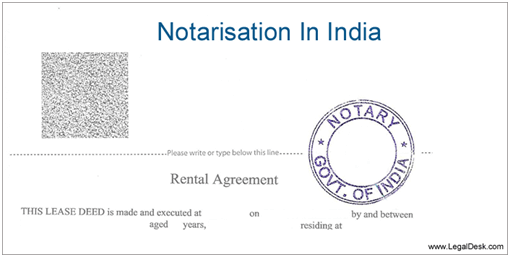
👉 Misuse, fraud-prone, and lacks digital trace.
- Court Fee Stamps
Court fee stamps are used to indicate payment of court fees before court proceedings.
They are generally used in correspondence between the general public and government departments, including RTO offices, passport-issuing authorities, and the police force.

👉 Specific to judiciary-related filings—not commercial use.
- Hundi Paper (Legacy)
Hundi papers are revenue stamps pre-printed on paper used for credit and trade transactions. They were used for bills of exchange, promissory notes, and other forms of IOUs.

👉 Hundi papers are remnants of the document legalization process that preceded India’s independence. Now it is obsolete, having no relevance in 2025.
The Shift: Why CXOs Choose Digital Stamp Duty Workflows
Manual stamping workflows were built for a different era. Today’s enterprises need stamping that’s instant, compliant, and scalable across locations, teams, and contract volumes.
Here’s how Melento digital stamping redefines the way modern organizations operate:
|
Benefit |
Enterprise Impact |
|
99% TAT Reduction |
Contracts get executed in minutes, not days |
|
Real-Time Tracking & Audit Trail |
100% visibility across geographies |
|
40–60% Lower Processing Costs |
Cut operational spending with zero paper dependency |
|
5x Improvement in SLA Compliance |
Contracts meet deadlines. Revenue is recognized faster |
|
Zero Document Loss or Error |
Smart validations prevent under/over-stamping |
|
Enterprise-Grade Scalability |
Stamp across 100+ locations and branches simultaneously |
Enterprises using Melento’s digital stamping have achieved 50–60% cost savings and 5x faster contract execution SLAs.
How to Digitize Stamp Duty in Minutes With Melento
Paying stamp duty no longer requires standing in bank queues, managing physical papers, or worrying about legal gaps. With Melento, enterprises can generate, apply for, and track stamp duty entirely online—in minutes —with zero paperwork and 100% compliance.
- Integrated with SHCIL, GRAS & eSBTR
✅ Enables pan-India automated stamping workflows.
✅ State-wise digital configuration. One system, nationwide coverage.
- eStamp Generation in Minutes
- Upload or auto-generate contracts from any integrated system.
- Melento auto-calculates duty, validates fields, and generates eStamps.
- Each document is tamper-proof, traceable, and legally valid.
📉 From 2–3 days to under 5 minutes. That’s 99% faster execution.
- Plug & Play APIs for LOS, CLM & DMS
- Melento seamlessly integrates with your:
- Loan Origination Systems (LOS)
- Contract Lifecycle Management (CLM) platforms
- Document Management Systems (DMS)
- Utilize our low-code APIs or SDKs to integrate stamping directly into your existing workflows seamlessly.
🔄 No disruption. Just instant automation at every branch or digital channel.
- Real-Time Status Dashboard
- Monitor stamping across geographies from a single screen.
- Track usage, status, expiry & costs in real-time.
- Export reports instantly for audits or board meetings.
🎯 Better governance. Full audit trail. 100% transparency.
- Legally Compliant with the Indian Stamp Act
- Melento’s stamping solution adheres to the Indian Stamp Act, 1899 and state-specific Stamp Acts.
- Each eStamp generated is legally valid, judicially recognized, and electronically verifiable.
📁 Documents stamped via Melento are court-enforceable and fraud-resistant.
Accelerate Every Deal With Melento Digital Stamping
Melento’s flagship digital stamping solution is preferred by 8 out of 10 businesses. Top legal experts back our digital stamping product, which enables you to track your document status at all times.
✅ With digital stamping, enterprises cut TAT by 99%
✅ Slash processing costs by up to 60%
✅ Achieve 100% legal validity and audit readiness
Ready to replace manual stamp duty with an efficient solution?
Join the Fortune 500s who are scaling with 100% compliance. Replace manual stamp duty with automated solutions.