
For decades, enterprises have relied on Business Process Management (BPM) systems to structure execution. These systems were designed for predictability: sequential approvals, predefined rule sets, and clearly demarcated handoffs.
That architecture worked in an era where processes were stable, integrations were limited, and human review dominated decision-making. But the enterprise has changed.
Modern operations are no longer linear. They are dynamic, API-driven, multi-stakeholder, and increasingly infused with artificial intelligence. In this environment, traditional workflow engines are beginning to show structural strain.
The issue is not incremental inefficiency. It is an architectural misalignment.
Why Linear Workflow Dependent BPM Is Failing
Traditional BPM systems assume that business logic flows in a predictable sequence. Step A leads to Step B. Approval precedes activation. Exceptions are rare and handled manually.
AI-first enterprises do not operate this way.
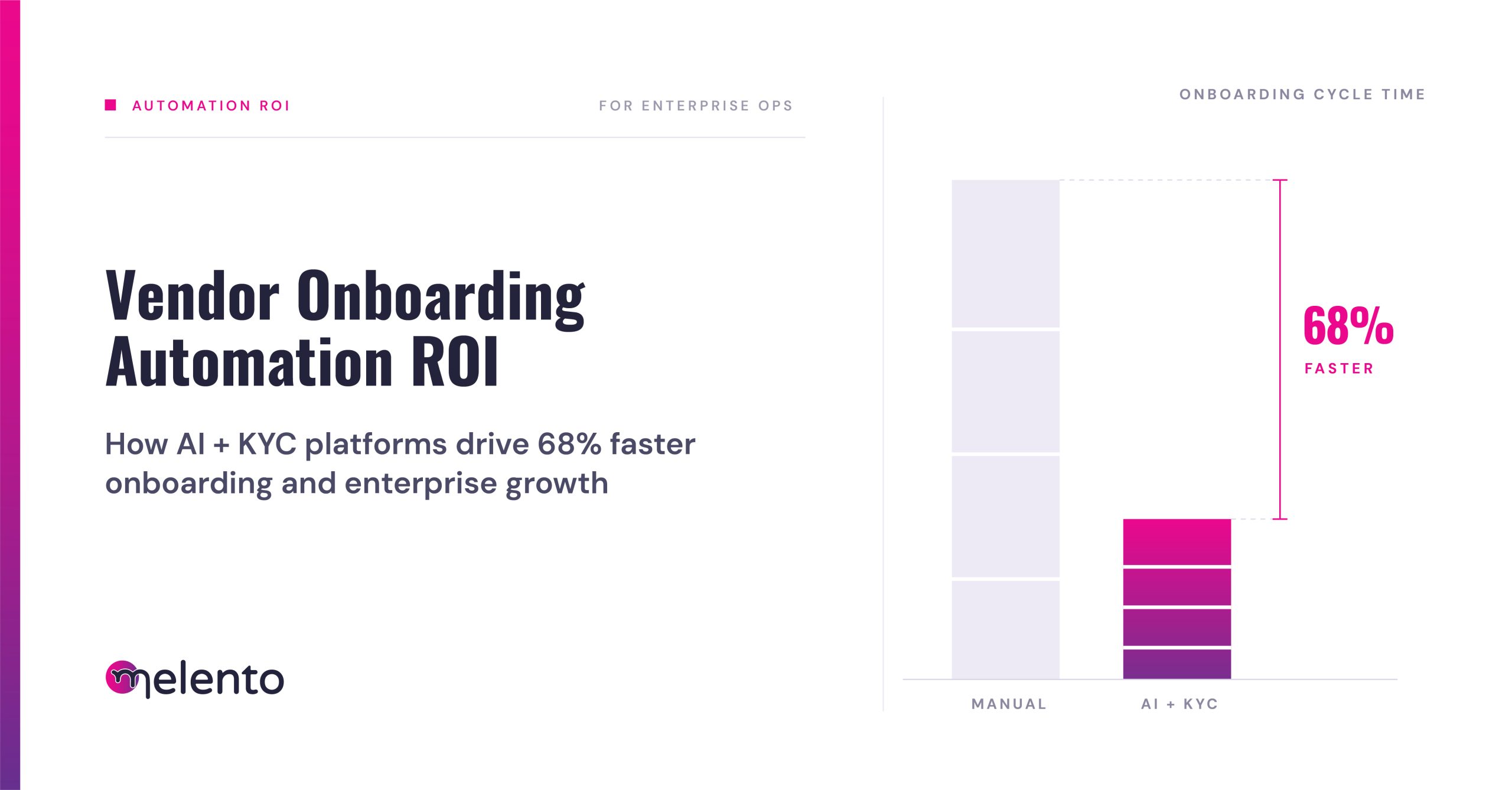
Customer onboarding may require simultaneous KYC verification, credit bureau checks, and risk assessment. Vendor onboarding may involve document extraction, sanction screening, bank validation, and policy-based routing. Invoice processing demands three-way matching across purchase orders, goods receipt notes, and invoices – often in parallel.
In such scenarios, logic branches dynamically. Decisions depend on real-time API responses. Risk thresholds alter approval hierarchies. Agents classify documents and influence routing paths.
Linear workflows struggle in this environment because they were not designed for conditional depth or parallel execution at scale.
Rule-heavy systems can encode logic tables. They cannot elegantly manage dynamic branching, embedded intelligence, and real-time integration across multiple systems without becoming brittle.
The enterprise is no longer executing static processes. It is orchestrating living systems.
From Rule Engines to Visual Orchestration
The shift underway is subtle but profound.
Instead of defining workflows as rigid sequences, leading enterprises are designing them visually – mapping decision trees, conditional branches, parallel paths, and escalation triggers through intuitive orchestration layers.
This is where MStream by Melento reflects a new execution philosophy.
MStream enables organisations to build workflows through a visual flowchart interface. Conditional nodes such as If and Switch Case allow logic to branch dynamically based on risk score, transaction value, geography, or compliance response. Split nodes enable parallel execution. Loop nodes process repeated validations across document sets.
Rather than burying business logic inside developer-heavy rule engines, enterprises can design complex processes transparently and adapt them as policies evolve.
This visual orchestration model replaces rule rigidity with structural flexibility.
Embedding Agents Inside the Workflow
The rise of AI agents has further exposed the limitations of linear workflow dependent BPM.
Document intelligence can extract structured data from contracts, invoices, tax certificates, and identity proofs. Risk agents can classify applications. AI models can suggest next-best actions.
However, intelligence without orchestration creates fragmentation.
Agents must operate within a governed execution layer – one that defines when they activate, how their outputs influence routing, and which stakeholders intervene.
MStream embeds AI-powered processing directly into workflows. Agents can extract document metadata, validate compliance inputs, or analyse risk signals at defined stages. Their outputs feed conditional logic nodes that determine subsequent routing.
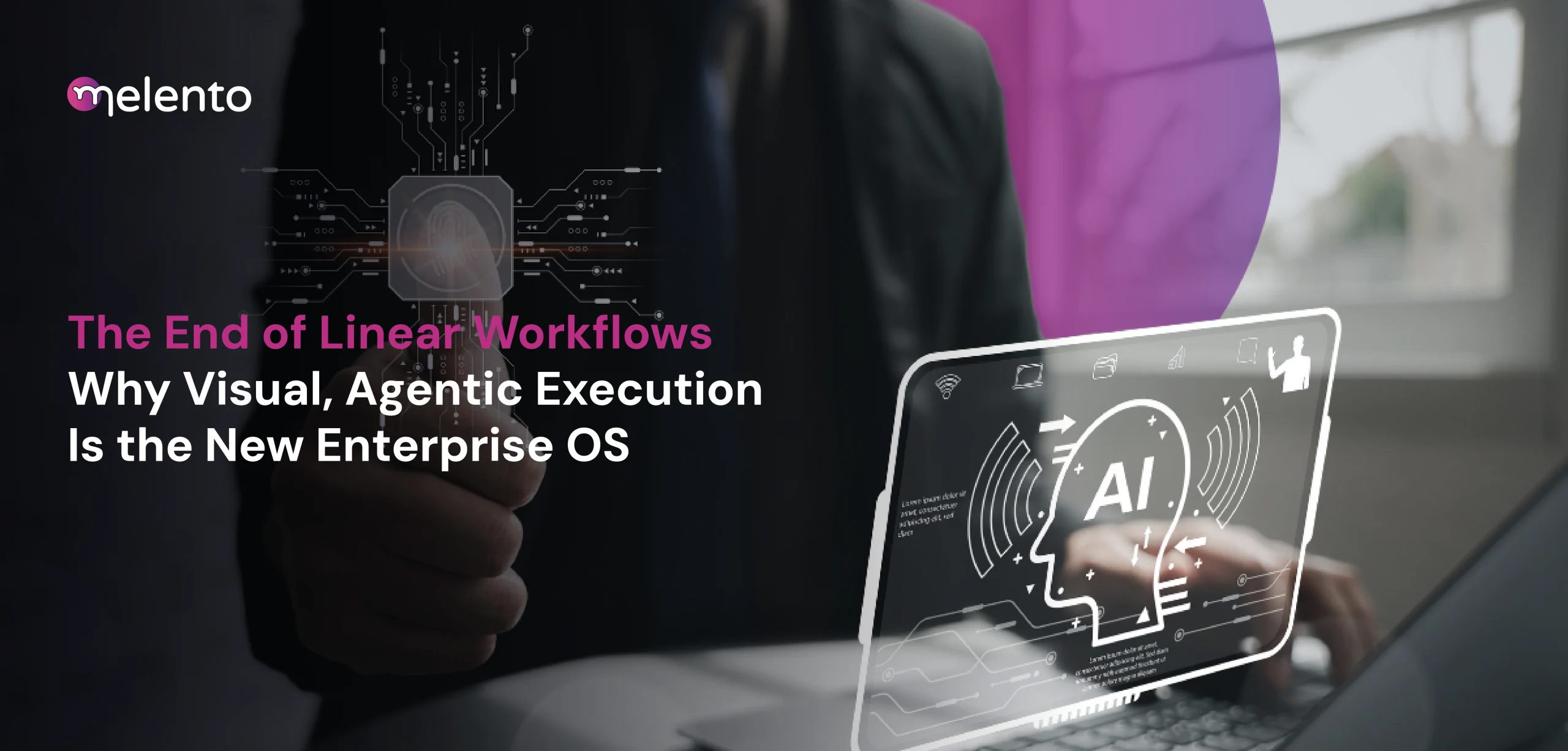
This creates what might be described as agentic execution – a system where intelligence and workflow are inseparable.
Traditional BPM layered AI on top of static processes. Visual orchestration integrates AI into the process architecture itself.
Workflow Meets Application
Another structural weakness of conventional workflow tools is their invisibility. They automate in the background while user interaction happens elsewhere.
Modern enterprises require workflows that function as applications.
Loan officers need real-time dashboards. Compliance teams require centralised approval queues. Customers expect portal visibility. Managers demand stage-by-stage transparency.
MStream, integrated with Melento’s intelligent process automation (Mwork) platform, addresses this gap by ensuring that every workflow becomes a fully interactive business application.
Users can view applications in a list or a Kanban dashboard. Approval queues consolidate pending decisions. Stage visualisation displays progress clearly. Commenting systems enable contextual collaboration. Role-based access ensures data governance. Every action generates an automatic audit trail.
In effect, the workflow is no longer a hidden engine. It becomes the operating interface for execution.
This convergence of workflow and application is central to the concept of a new enterprise OS.
Data as Infrastructure, Not By-Product
Traditional BPM systems often treat data as output – stored externally, analysed later.
In AI-first enterprises, data must function as infrastructure.
Melento’s MStream stores workflow data within a structured Smart Space, ensuring that every submission, API interaction, approval, and status change is captured and accessible. Native reporting capabilities allow enterprises to monitor SLA adherence, exception rates, and performance metrics without exporting data into separate tools.
Historical analysis becomes intrinsic to the system rather than a retrospective exercise.
When workflows, agents, and data share the same architectural foundation, governance strengthens and optimisation accelerates.
Build Once, Run Anywhere
Perhaps the most significant implication of visual, agentic execution is architectural reuse.
The same orchestration model that supports customer onboarding can power vendor onboarding, loan origination, employee onboarding, invoice processing, compliance monitoring, or query resolution.
Through configurable forms, API integrations, approval nodes, assignment mechanisms, and embedded agents, enterprises can design once and adapt across use cases.
A loan origination system may combine KYC integration, credit bureau APIs, and risk-based routing. A vendor onboarding flow may integrate sanction screening and compliance validation. An invoice processing system may perform three-way matching through loop and conditional nodes.
The underlying architecture remains consistent.
This is what “build once, run anywhere” means in execution terms – not code portability, but orchestration portability.
MStream provides that reusable execution layer.
Dual Automation: Sequential and Reactive
AI-first enterprises also require layered automation.
Sequential workflow orchestration governs the structured progression of a process. Event-driven automation rules operate in parallel, sending notifications, updating external systems, escalating SLA breaches, or triggering compliance alerts.
MStream supports both models simultaneously. This dual capability ensures that execution remains governed while also responsive.
Linear BPM assumed one path. Agentic execution accommodates structured flow plus reactive intelligence.
A New Enterprise Operating System
Enterprises do not merely need better workflow tools. They need a new execution paradigm.
Linear, rule-heavy BPM systems were designed for a different era – one defined by predictable processes and limited integrations.
The AI-first enterprise operates differently. It requires visual orchestration, embedded agents, real-time API choreography, structured data governance, and collaborative application layers.
MStream by Melento represents this shift. By combining visual workflow design, agent integration, dual automation, application-layer visibility, and structured data infrastructure, it moves beyond automation toward execution architecture.
The future of enterprise systems will not be defined by isolated tools. It will be defined by how intelligently and visibly they execute.
Linear workflows are ending. Visual, agentic execution is emerging as the new enterprise OS.
For organisations navigating this transition, the question is no longer whether to modernise workflows – but how to redesign execution itself.
To see how this architecture works in practice, explore MStream in action.