
In India, the way businesses sign agreements has changed dramatically over the past decade. Earlier, signing a contract meant printing documents, signing them physically, scanning them, and sending them back by email. This process slowed down approvals and created unnecessary paperwork.
Today, organizations increasingly rely on electronic signatures (eSignatures) to finalize agreements digitally. From banking and fintech to HR onboarding and vendor contracts, businesses now sign documents online in minutes instead of days.
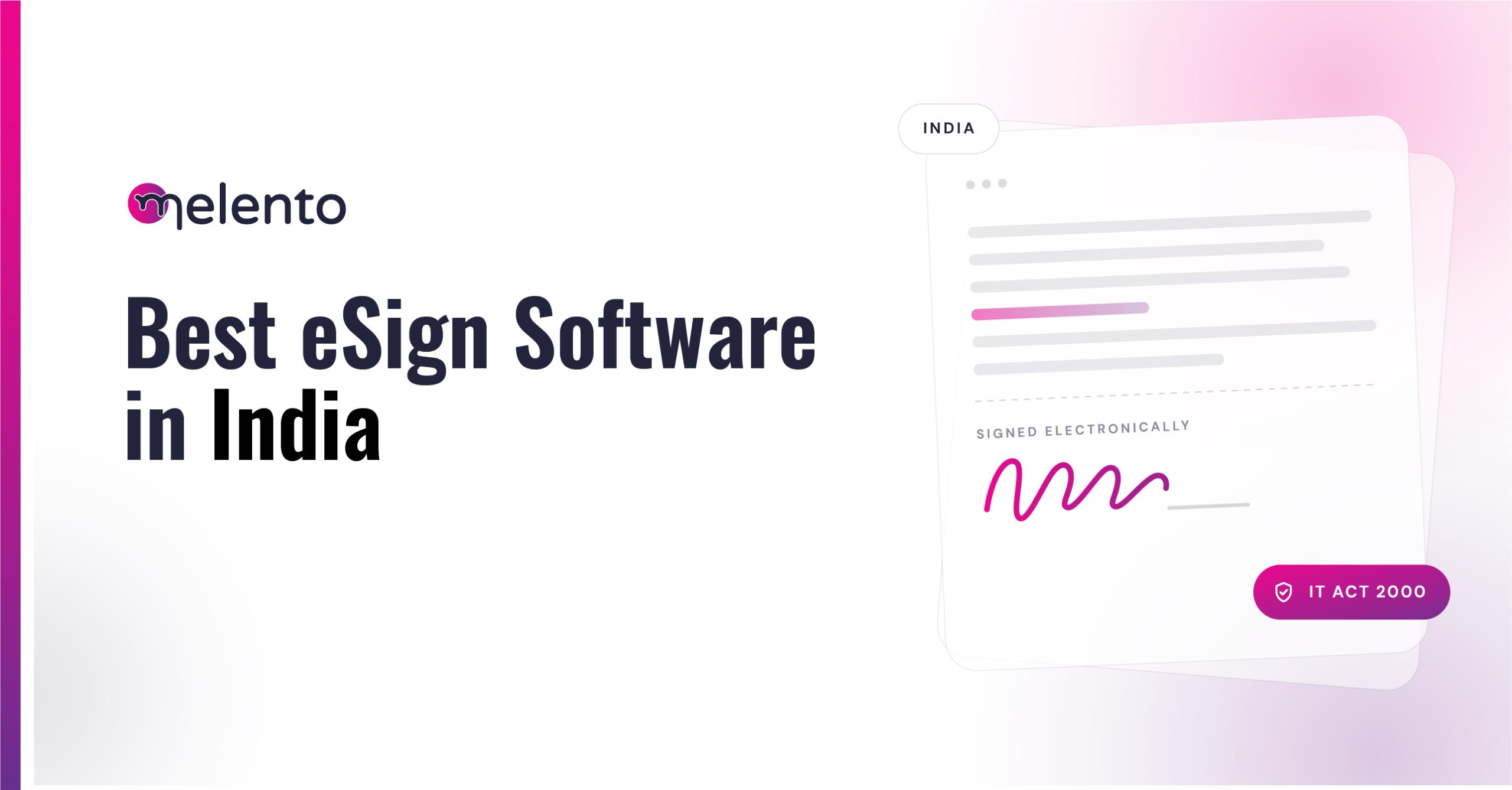
Electronic signatures allow individuals and organizations to approve documents digitally using authentication methods such as OTP verification, Aadhaar-based authentication, or digital certificates.
Modern eSignature platforms like Melento help businesses securely manage digital agreements, automate approval workflows, and maintain audit trails for compliance.
In this guide, we’ll explain:
- What an eSignature is
- How electronic signatures work
- Types of eSignatures used in India
- Legal validity of eSignatures
- How businesses use eSign platforms to manage agreements
Why E-Signatures Are Rapidly Growing in India
Over the last few years, India has witnessed rapid growth in digital document workflows.
Several factors have accelerated the adoption of electronic signatures across industries.
-
Digital India and Paperless Governance
Government initiatives promoting paperless documentation and digital services have encouraged businesses to adopt electronic signatures.
-
Growth of Fintech and Digital Lending
Banks, NBFCs, and fintech companies frequently rely on Aadhaar-based eSign and OTP verification to complete loan agreements, onboarding forms, and mandate approvals.
-
Remote Business Operations
Organizations now operate across multiple cities and states. Electronic signatures allow agreements to be signed without requiring physical presence.
-
Compliance and Audit Requirements
Modern eSign platforms generate audit trails, timestamps, and document verification logs, helping organizations meet regulatory and compliance requirements.
Because of these advantages, electronic signatures have become an essential part of India’s digital business infrastructure.
The SIGNATURE™ Framework for Digital Contract Execution
To understand how modern electronic signature platforms securely execute contracts, it helps to look at the SIGNATURE™ framework — a structured model that explains how agreements move from draft documents to legally valid, fully executed contracts with built-in security, compliance, and auditability.
This framework outlines the key stages that ensure digital contracts are created, signed, verified, and stored correctly.
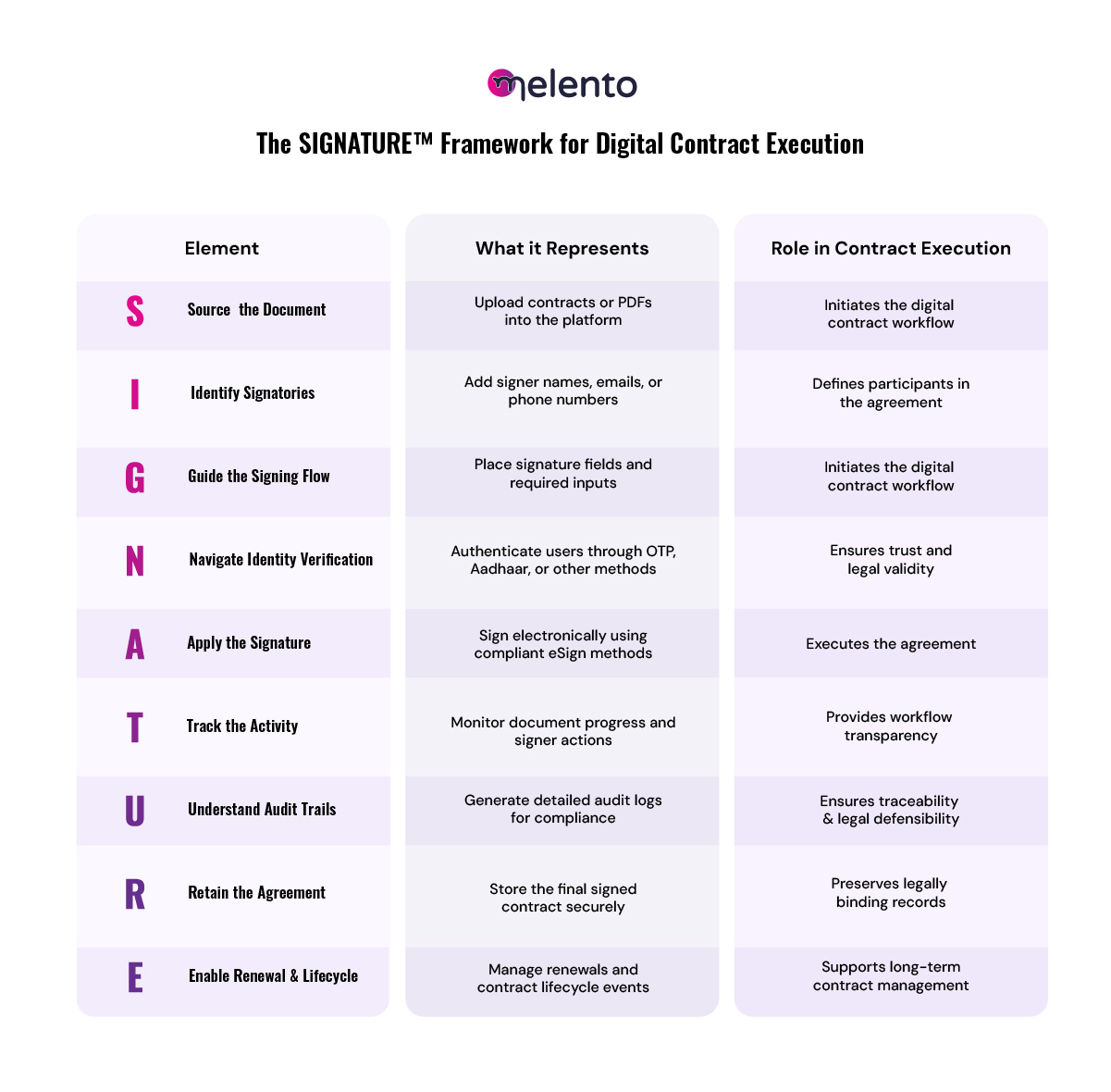
Understanding the SIGNATURE™ framework helps organizations standardize digital signing workflows, maintain compliance records, and ensure that contracts remain legally enforceable throughout their lifecycle.
What Is an E-Signature?
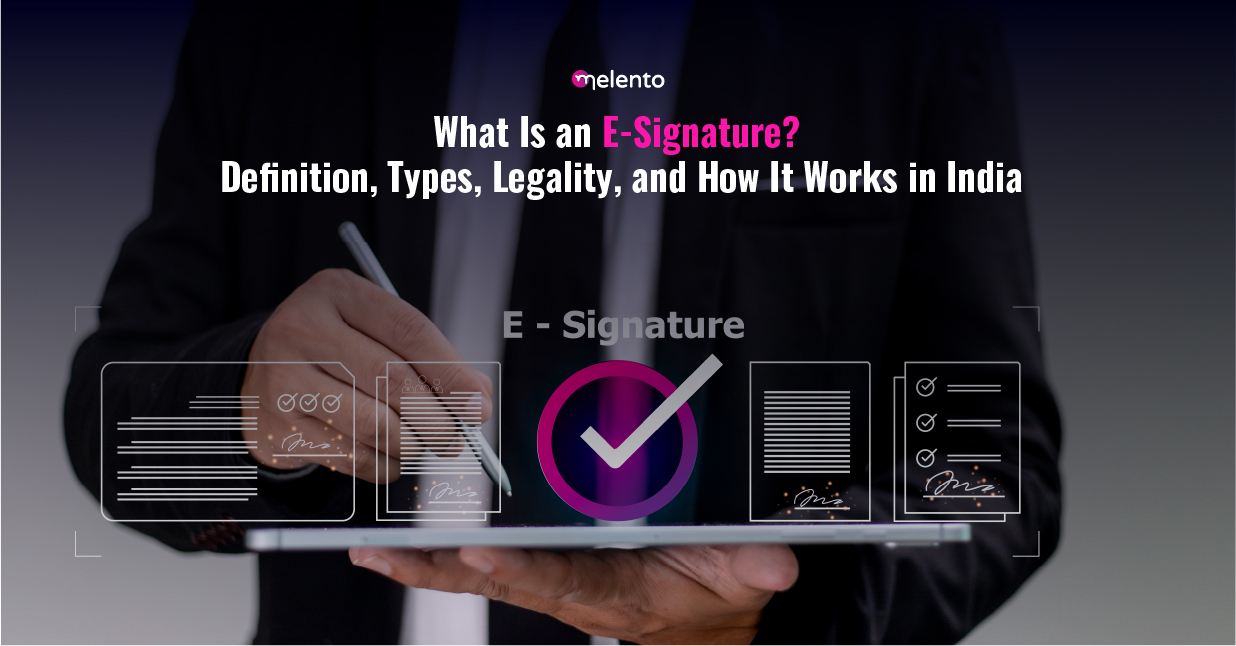
An electronic signature (eSignature) is a digital method used to indicate a person’s agreement to the contents of an electronic document.
Instead of signing with pen and paper, individuals can sign documents electronically using a computer, smartphone, or tablet.
Electronic signatures are commonly used for:
- business contracts
- HR onboarding documents
- vendor agreements
- financial contracts
- compliance documentation
They enable businesses to complete agreements faster while maintaining secure digital records.
E-Signature Meaning in Simple Terms
In simple terms, an eSignature is a digital replacement for a handwritten signature.
Instead of printing and scanning documents, users can sign electronically with a few clicks.
This allows organizations to approve documents quickly while reducing paperwork and administrative effort.
Examples of Electronic Signatures
Electronic signatures can take several forms depending on the platform and verification method.
Common examples include:
- typing your name in a signature field
- drawing a signature using a touchscreen or mouse
- uploading a signature image
- clicking an “I Agree” button
- signing using OTP verification
- signing using a digital certificate
Each method confirms that the signer intended to approve the document digitally.
How Electronic Signatures Work
Electronic signature platforms simplify the document signing process by enabling users to upload documents, add signers, and collect signatures digitally.
A typical signing process includes:
- Uploading the document to an eSignature platform
- Adding signer details such as email or phone number
- Placing signature fields in the document
- Sending the document for signing
- Verifying signer identity
- Storing the completed document with an audit trail
Platforms like Melento automate this process, allowing organizations to track document status and manage agreements more efficiently.
Types of E-Signatures Used in India
Although electronic signatures are used worldwide, Indian businesses often rely on specific authentication methods.
-
Aadhaar-Based eSign
Many organizations use Aadhaar authentication to verify a signer’s identity before applying an electronic signature.
-
OTP-Based Signing
One-time password verification sent to a registered mobile number is widely used for digital agreements.
-
Digital Signature Certificates (DSC)
Digital Signature Certificates are commonly required for:
- government filings
- compliance documentation
- regulated transactions
Electronic Signature vs Digital Signature
Electronic signatures and digital signatures are often confused, but they are not the same.
| Feature | Electronic Signature | Digital Signature |
| Definition | Electronic method used to sign documents | Cryptographic signature using encryption |
| Technology | Click, typed name, signature image | Public Key Infrastructure (PKI) |
| Security | Basic to advanced | Very high security |
| Usage | Contracts and agreements | Government and regulated documents |
A digital signature is a specific type of electronic signature, but not all electronic signatures use cryptographic encryption.
Benefits of Using E-Signatures
Electronic signatures offer significant advantages for businesses.
-
Faster Document Signing
Documents can be signed within minutes instead of days.
-
Paperless Workflows
Organizations can eliminate printing, scanning, and physical storage.
-
Compliance and Auditability
Modern eSign platforms generate audit trails and verification logs.
-
Remote Accessibility
Documents can be signed from anywhere using smartphones or laptops.
-
How Businesses in India Use E-Signatures
Electronic signatures are widely used across industries.
-
Banking and NBFCs
Loan agreements and financial contracts are often signed digitally.
-
Fintech Platforms
Digital lending companies use eSignatures for borrower agreements and onboarding documentation.
-
HR and Employee Onboarding
Companies collect employment contracts and policy acknowledgments electronically.
-
Real Estate Documentation
Lease agreements and property documentation are increasingly signed digitally.
Security and Compliance in Electronic Signatures
Security is critical for digital agreements.
Modern eSign platforms include multiple security mechanisms:
-
Identity Authentication
Verification through OTP, Aadhaar authentication, or digital certificates.
-
Audit Trails
Every action during the signing process is recorded with timestamps.
-
Encryption
Documents are protected using encryption to prevent tampering.
How Melento Helps Businesses Manage Digital Agreements
Organizations that handle high volumes of agreements often require more than just basic electronic signing.
Platforms like Melento combine electronic signatures with workflow automation and agreement management.
With Melento, businesses can:
- automate document approvals
- collect legally valid electronic signatures
- maintain audit trails for compliance
- manage high-volume agreements efficiently
This helps organizations move beyond simple digital signing and implement fully automated agreement workflows.
When Businesses Should Use an eSign Platform
Organizations benefit the most from eSignature platforms when they need:
- secure electronic signatures
- automated document workflows
- compliance-ready documentation
- large-scale agreement execution
- centralized document management
Conclusion
Electronic signatures have transformed how businesses manage agreements and approvals.
In India, the combination of legal recognition under the IT Act, digital infrastructure, and fintech innovation has accelerated the adoption of electronic signatures across industries.
By replacing paper-based processes with digital workflows, organizations can reduce delays, improve compliance, and streamline document management.
Platforms like Melento enable businesses to securely sign, manage, and automate agreements, helping organizations operate more efficiently in a digital-first environment.