
What Does A Modern, Secure Digital Signing Infrastructure Look Like?
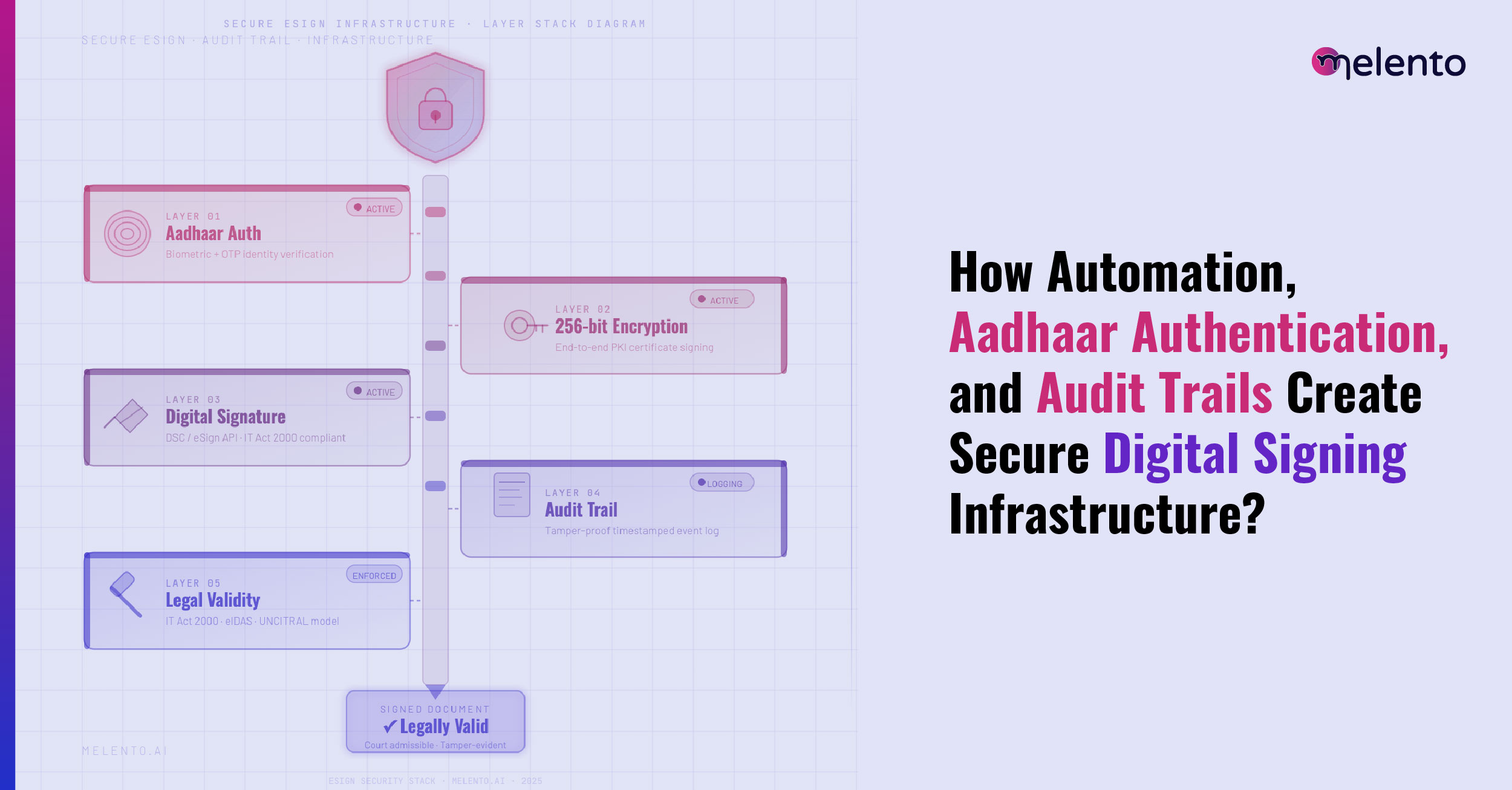
A modern digital signing infrastructure combines automation, Aadhaar-based authentication, AI-powered validation, and audit trails into a single unified workflow. Platforms like Melento integrate these elements to ensure that documents are not just signed, but also verified, routed, tracked, and stored in a compliant manner. This approach enables organizations to move from fragmented processes to end-to-end digital control, improving both speed and regulatory readiness.
How Does Workflow-First Automation Improve Signing Efficiency And Compliance?
Workflow-first automation ensures that every document follows a predefined path through verification, approval, and signing without manual intervention. With Melento’s workflow-driven eSign, signing occurs only after structured approvals and compliance checks are completed.
This reduces turnaround time by up to 70%, eliminates process gaps, and ensures that no critical step is skipped, making compliance built-in rather than reactive.
How does Aadhaar-based eSign strengthen identity verification in digital workflows?
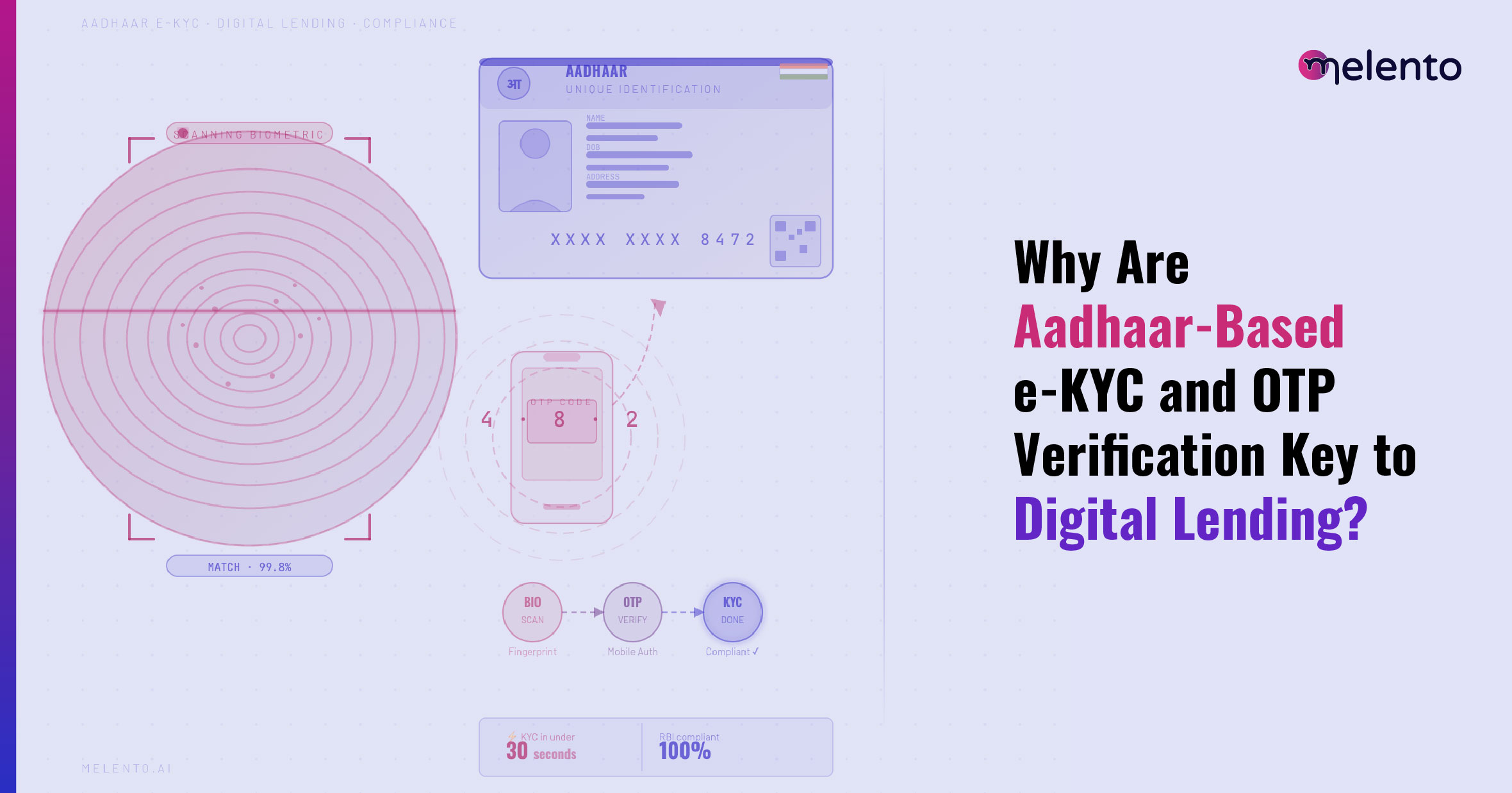
Aadhaar-based eSign verifies a user’s identity through OTP or biometric authentication against a government-backed database. Melento’s Aadhaar eSign integrates this authentication directly into the workflow, ensuring identity verification happens at the right stage of the transaction.
This reduces the risk of impersonation and aligns with regulatory standards, creating a secure and legally valid signing process.
How does Aadhaar authentication enhance security in digital signing workflows?
Aadhaar authentication enhances security by verifying the signer’s identity against a trusted, government-backed database. When users authenticate via OTP or biometrics, it ensures that only the rightful Aadhaar holder can access and sign documents.
This prevents impersonation and strengthens identity assurance, making digital transactions more secure and compliant with regulatory standards.
What role does AI-powered KYC play in reducing fraud and improving accuracy?
AI-powered KYC enhances traditional verification by analyzing data patterns, detecting inconsistencies, and automating validation checks.
With Melento’s AI-powered KYC, organizations can reduce manual verification efforts & overall TAT by 70% while improving accuracy and fraud detection. With Melento, businesses can ensure faster onboarding decisions and stronger compliance with evolving regulatory expectations.
Why Are Audit Trails Essential For Regulatory Compliance And Legal Validity?
Audit trails provide a complete, tamper-proof record of every action taken during the signing process. Melento’s audit-ready infrastructure captures timestamps, user actions, authentication methods, and document changes in real time. This ensures compliance with regulatory requirements and provides legally admissible evidence in case of disputes or audits.
How do automation, Aadhaar, AI, and audit trails work together in a unified workflow?
These components work together to create a seamless and secure transaction lifecycle. Automation manages document flow, Aadhaar authentication verifies identity, AI validates data and detects risks, and audit trails record every step. Melento unifies all these layers into a single platform, ensuring transactions are completed quickly without compromising compliance or security.
How does Melento differentiate from basic eSign tools in digital signing workflows?
Basic eSign tools focus only on capturing signatures. Melento differentiates by offering a workflow-first platform where:
- Signing happens after structured approvals
- AI validates KYC data in real time
- Audit trails are automatically generated
- Compliance checkpoints are embedded into workflows
Moreover, you get eStamp, CLM, and Collaborative Intelligence embedded with Melento Suite. This transforms eSign from a standalone feature into a strategic compliance and efficiency engine.
What Are The Best Practices For Building A Secure And Scalable eSign Infrastructure?
Building a secure and scalable eSign infrastructure requires a combination of technology, process design, and compliance-first thinking.
- Adopting workflow-first automation instead of standalone signing tools is critical. Rather than treating eSign as a one-off activity, organizations should embed it within structured workflows that include verification, approvals, and conditional routing.
- Using Aadhaar-based authentication for trusted identity verification adds a strong layer of security. By leveraging OTP, biometric validation, or AI-powered identity checks linked to a government-backed identity system, organizations can ensure that only the rightful individual is signing the document.
- Integrating AI-powered KYC for risk detection and accuracy further enhances the system. AI can automatically validate user data, detect inconsistencies, flag suspicious patterns, and reduce reliance on manual checks.
- Ensuring encryption and secure document storage protects sensitive information throughout the document lifecycle. End-to-end encryption, role-based access controls, and secure storage mechanisms help prevent unauthorized access, data breaches, and tampering.
- Maintaining detailed, tamper-proof audit trails is essential for compliance and dispute resolution. Every action, such as document access, authentication, signing, and modifications, should be recorded with timestamps and user identifiers.
Platforms like Melento bring all these best practices together into a unified, workflow-driven system.