
Vendor onboarding is rarely discussed in strategy meetings. Yet it sits at the heart of enterprise velocity.
It determines how quickly procurement can activate suppliers, how confidently finance can release payments, and how securely compliance can defend regulatory scrutiny. When it works well, organisations move faster. When it falters, the impact is immediate: delayed procurement cycles, working capital inefficiencies, audit anxiety, and operational friction.
Despite years of digitisation efforts, vendor onboarding remains structurally fragile in many enterprises. The reason is not a lack of tools. It is the absence of orchestration.
The Limits of Digitisation
Most organisations have already digitised vendor onboarding in some form.
- Vendors upload documents through portals.
- Tax and identity checks are triggered via APIs.
- AI tools extract data from invoices and certificates.
- Compliance screening runs in specialised systems.
On paper, the process appears modern.
In practice, the journey is fragmented.
- Data is captured in one system.
- Verification occurs in another.
- Approvals move through separate dashboards or email threads.
- Reporting requires exports into BI tools.
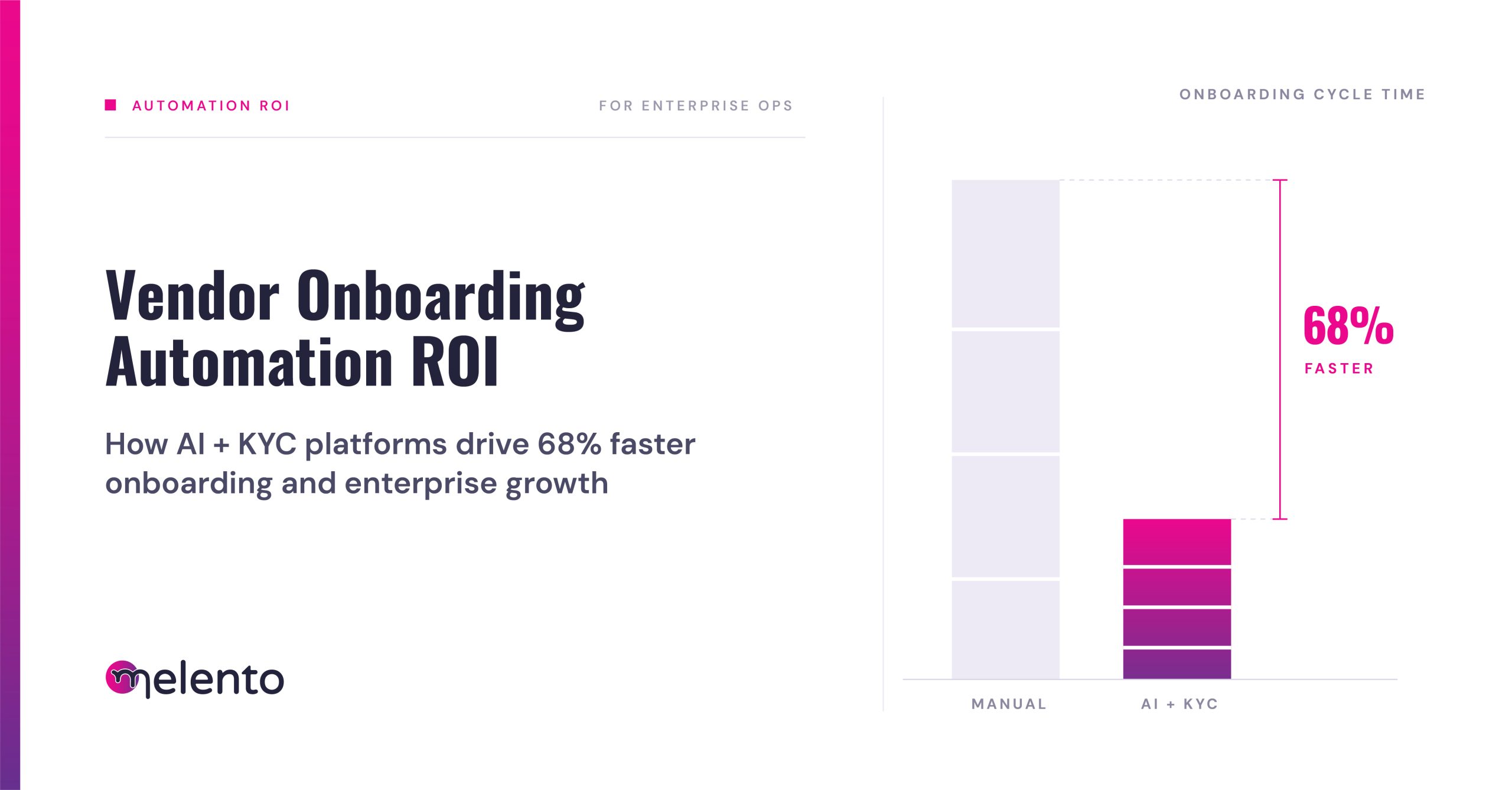
According to studies, procurement inefficiencies can delay onboarding cycles by as much as 20–30%, directly affecting time-to-value and supplier activation. In regulated sectors, fragmented vendor validation increases audit risk and compliance overhead.
Digitisation has replaced paper. It has not redesigned the architecture.
From Extraction to Execution
Artificial intelligence has introduced meaningful improvements. Document intelligence tools can extract GST numbers, bank account details, contract metadata, and compliance information within seconds. Classification models can categorise documents and flag missing data.
Yet extraction is not execution.
The core of vendor onboarding lies in structured decisions:
- Should this vendor require enhanced due diligence?
- Does this transaction threshold mandate multi-level approval?
- Must compliance and finance review occur in parallel?
- Should activation be paused pending bank verification?
These are orchestration questions.
AI agents can surface insights. They cannot, on their own, govern multi-stakeholder execution across systems. This is precisely the gap that Melento’s MStream was designed to address.
Designing Vendor Onboarding as a Visual System
MStream approaches vendor onboarding not as a sequence of disconnected automations, but as a visual, governed workflow application.
Using an intuitive flow-based builder, enterprises can design onboarding journeys that translate policy directly into executable logic. Conditional nodes allow branching based on vendor category, geography, or risk score. Switch-case logic handles multiple compliance scenarios elegantly. Loop nodes validate repeated document sets. Split nodes enable parallel reviews by finance and compliance teams.
Approval nodes route cases automatically through structured hierarchies. Assignment nodes delegate tasks clearly. HTTP and webhook integrations connect seamlessly to external systems – sanction screening databases, tax verification APIs, and banking validation services.
The result is a single, coherent execution layer where every decision is traceable and every action governed.
Workflow Meets Application
A defining weakness of traditional workflow engines is that they operate invisibly. They automate in the background but do not create a unified environment for users.
Vendor onboarding, however, is inherently collaborative.
- Procurement teams need queue visibility
- Compliance officers require audit-ready records
- Finance teams must track verification stages
- Vendors expect transparency into the status
MStream, integrated with Melento’s MWork platform, transforms workflows into fully functional business applications.
Each onboarding journey becomes:
- A real-time dashboard with a list and Kanban views
- A consolidated approval queue for managers
- A structured collaboration space with contextual commenting
- Stage visualisation showing progress across milestones
- Automatic role-based access control at every step
- A complete audit trail capturing every action
Vendors themselves can access branded portals to track application status, reducing inbound queries and improving experience.
In this model, workflow logic is inseparable from user experience. Execution is visible, not hidden.
Data as a First-Class Asset
One of the most persistent vulnerabilities in vendor onboarding is data fragmentation.
In many enterprises, document data resides in one repository. Approval records in another. Compliance logs elsewhere. Reporting requires manual reconciliation.
MStream addresses this by treating workflow data as structured infrastructure.
Through the MWork Smart Space, every form submission, agent action, approval decision, and API interaction is automatically stored and structured. Data is not an afterthought. It is native to the workflow.
This enables:
- Built-in reporting without external tools
- Historical analysis across vendor cohorts
- Clear SLA tracking
- Immediate audit readiness
- Embedded business intelligence dashboards
For regulated industries, this consolidation materially strengthens governance posture.
Agents Within Governance
Artificial intelligence remains central – but within a governed framework.
Inside MStream workflows, AI agents extract and validate document data, classify vendor types, detect anomalies, and support risk assessment. These agents operate at defined workflow stages rather than as isolated utilities.
Sequential orchestration manages the structured journey. In parallel, MWork’s event-driven automation rules trigger notifications, update ERP systems, escalate high-value cases, or initiate secondary compliance checks. This dual automation capability ensures that vendor onboarding is both methodical and responsive.
- Agents provide cognitive processing
- Workflows provide structured execution
- The application layer provides visibility
- The data layer provides governance
Together, they form an integrated stack.
A Reference Architecture for Vendor Onboarding
Seen holistically, MStream represents more than a workflow builder. It provides a reference architecture for intelligent vendor onboarding:
- Structured intake via configurable forms and portals
- AI-powered document extraction and classification
- Conditional routing through visual workflow logic
- Multi-level approvals and task delegation
- External system integration through APIs
- Real-time collaboration and dashboard visibility
- Structured data storage and audit trails
- Event-driven automation for communication and escalation
Each layer reinforces the next. The outcome is not merely faster document processing, but faster, traceable decisions.
From Operational Burden to Strategic Lever
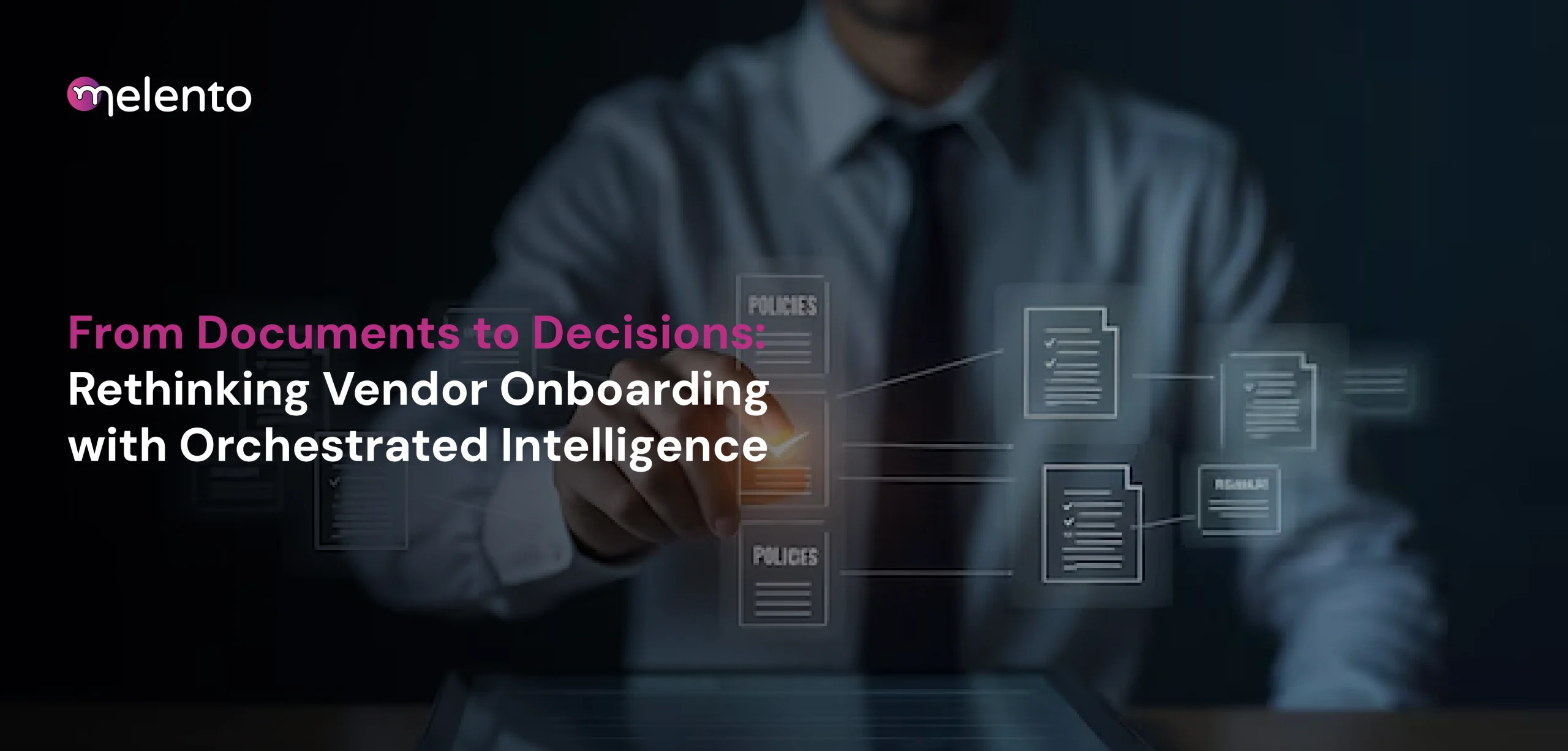
Vendor onboarding is too critical to remain a fragmented administrative process. When redesigned as an orchestrated intelligence system – combining agents, visual workflows, integrated applications, and structured data – it becomes a strategic capability.
- Procurement cycles shorten
- Compliance risk declines
- Operational transparency improves
- Supplier experience strengthens
The distinction is subtle but decisive. Digitisation accelerates steps.
Orchestration accelerates outcomes.
Melento’s MStream addresses vendor onboarding not by adding another tool to the stack, but by redesigning the stack itself – ensuring that documents do not simply enter the system, but translate into governed, intelligent decisions.
In the modern enterprise, that architectural shift is no longer optional.