
Ask anyone who has pushed a contract through a large company where the time went. It wasn’t the drafting. It usually wasn’t the contract negotiation either. It was the days the document sat in someone’s inbox, waiting for the person ahead of it to click approve.
Nobody was working on it. Nobody was blocking it on purpose. It was just queued.
That queue has a shape, and once you see it, you’ll start spotting it in every contract approval process you touch.
The maths of a sequential contract approval workflow
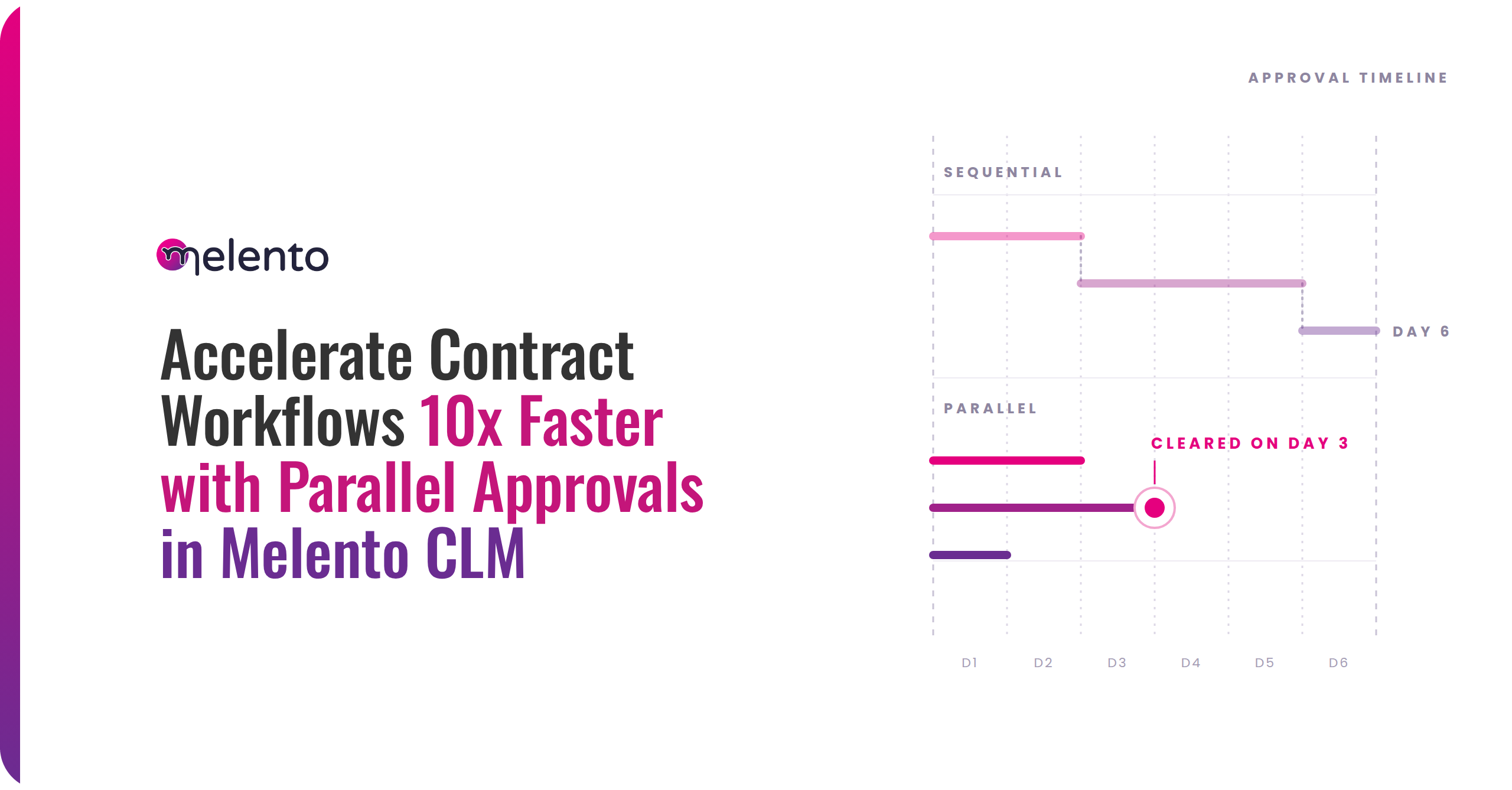
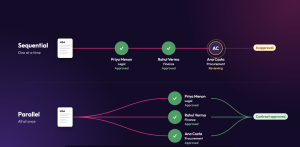
Most approval chains are built like a relay. Legal reviews and hands the baton to finance, finance hands it to the business head. Each runner starts only when the last one finishes, so total approval time is every reviewer’s time added together.
Say legal takes two days, finance three, the business head one. Six days.
Now put the same three people in parallel. They all get the contract on day one, and it clears when the slowest of them is done: day three. Same people, same scrutiny, half the calendar. The review didn’t get lighter. You just removed the line.
The gap widens with every approver you add. Bring in procurement at two days and a CFO sign-off at one, and the sequential chain stretches to nine days. The parallel version still finishes on day three, because parallel time grows with the slowest reviewer, while sequential time grows with all of them.
So why does anyone still approve in sequence?
Because sometimes order genuinely matters. If finance needs to see legal redlines before it can sign off on the commercials, that’s a real dependency, and a sequential chain respects it.
The mistake is defaulting to sequence for reviews that never depended on each other. A lot of approval process workflows inherited their order from an org chart, or from whoever set up the email template five years ago. Not from any actual dependency.
Here’s a test worth running on every step of your contract review process: would approver B decide differently based on what approver A said? If yes, keep them in sequence. If not, you’re making a B queue for nothing.
Run that test honestly and most chains collapse into one parallel group with, at most, a dependent step or two.
A quick way to decide
| If this is true… | Route it |
| Finance has to price against legal’s final redlines | Sequential |
| Legal, finance and compliance each check something different | Parallel |
| Risk only needs to see it if legal flags a deviation | Sequential |
| High-volume templated agreements (NDAs, standard vendor terms) | Parallel |
| One reviewer just likes to go last | Parallel. Habit isn’t a dependency. |
How Parallel Approvals works in Melento CLM
Parallel Approvals live where approvals already happen: on the contract itself, inside Melento’s contract lifecycle management software.
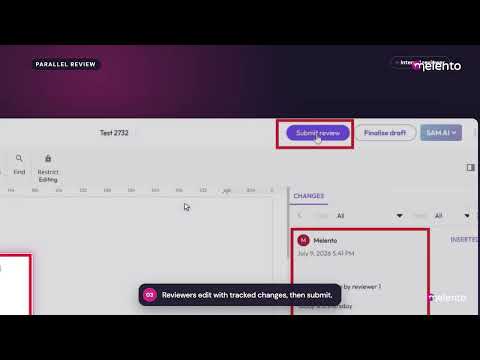
Add two or more approvers in the Collaborators panel and an Approval mode switch appears. It defaults to Sequential; one click moves it to Parallel. Hit Invite all and every approver is notified at the same moment. The contract moves from Draft to Awaiting approval and advances once all of them have signed off.
No scripting, no second tool, no separate multi-level approval workflow builder to maintain on the side. Two design choices deserve a closer look.
The approval mode locks once invites go out
That sounds restrictive. It’s the point. Once invitations are sent, nobody can quietly reroute a contract mid-review, and the record shows exactly how it was approved: who was invited, in which mode, and when each person acted. If you’ve ever rebuilt an audit trail from forwarded emails the night before an audit, you already know what that’s worth.
Fail fast, on purpose
In a naive parallel setup, a rejection from legal doesn’t stop finance and the business head from burning an afternoon on a contract that’s already going back.
Melento CLM handles this directly. The moment any approver rejects, the links sent to everyone else are invalidated and those approvers are told no action is needed. No one stops the clock for everyone.
The request isn’t dead, though. Fix the issue, resubmit, and every approver gets a fresh invitation on the corrected version. Nobody reviews a stale draft, and nobody wonders which copy is current. This is what approval workflow automation should mean: not moving the PDF faster, but deleting waits that never had a reason to exist.
Where approvals sit in the contract lifecycle management journey
Approval is one stage in a longer contract lifecycle management process. In Melento CLM it sits between drafting and negotiation, on the same platform where the contract is later executed with native eStamp and eSign, mined for clauses and risks by AI contract intelligence, and tracked through obligations and renewal with Source-to-Obligation automation.
That matters more than it sounds. When approvals live in an email thread, your contract management process has a hole in the middle: the one stage everyone argues about later is the one stage with no system record. When approvals live on the contract, the record travels with it from request to renewal.
If you’re redesigning the whole contract workflow, not just the approval step, our guide to building a high-efficiency contract management workflow walks through it end to end, and these CLM best practices cover the governance side.
And if you’re evaluating CLM software right now, ask one blunt question in every demo: show me how your document approval workflow handles a rejection halfway through. The answer will tell you more than any feature grid.
Most approval delays are a sequencing problem
Not a people problem. Your approvers aren’t slow; they’re waiting. A faster contract approval workflow comes down to three moves: keep order where it matters, remove it where it doesn’t, and let one rejection stop the clock for everyone.
Parallel Approvals is live in Melento CLM today. See how it’s configured , browse the full list of CLM features, or book a demo and watch a contract clear all its approvers in one pass.