
SaaS Isn’t Dying. It’s Fragmenting – And That’s Where the Real Opportunity Lies
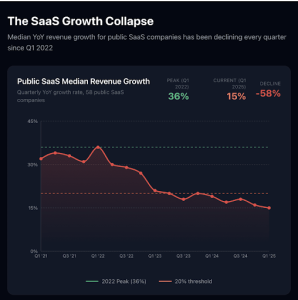
Every few months, a new narrative emerges: AI will kill SaaS. The logic sounds compelling – if AI can generate code, automate workflows, and replace entire layers of software, why would we need hundreds of SaaS tools?
But this framing is fundamentally flawed.
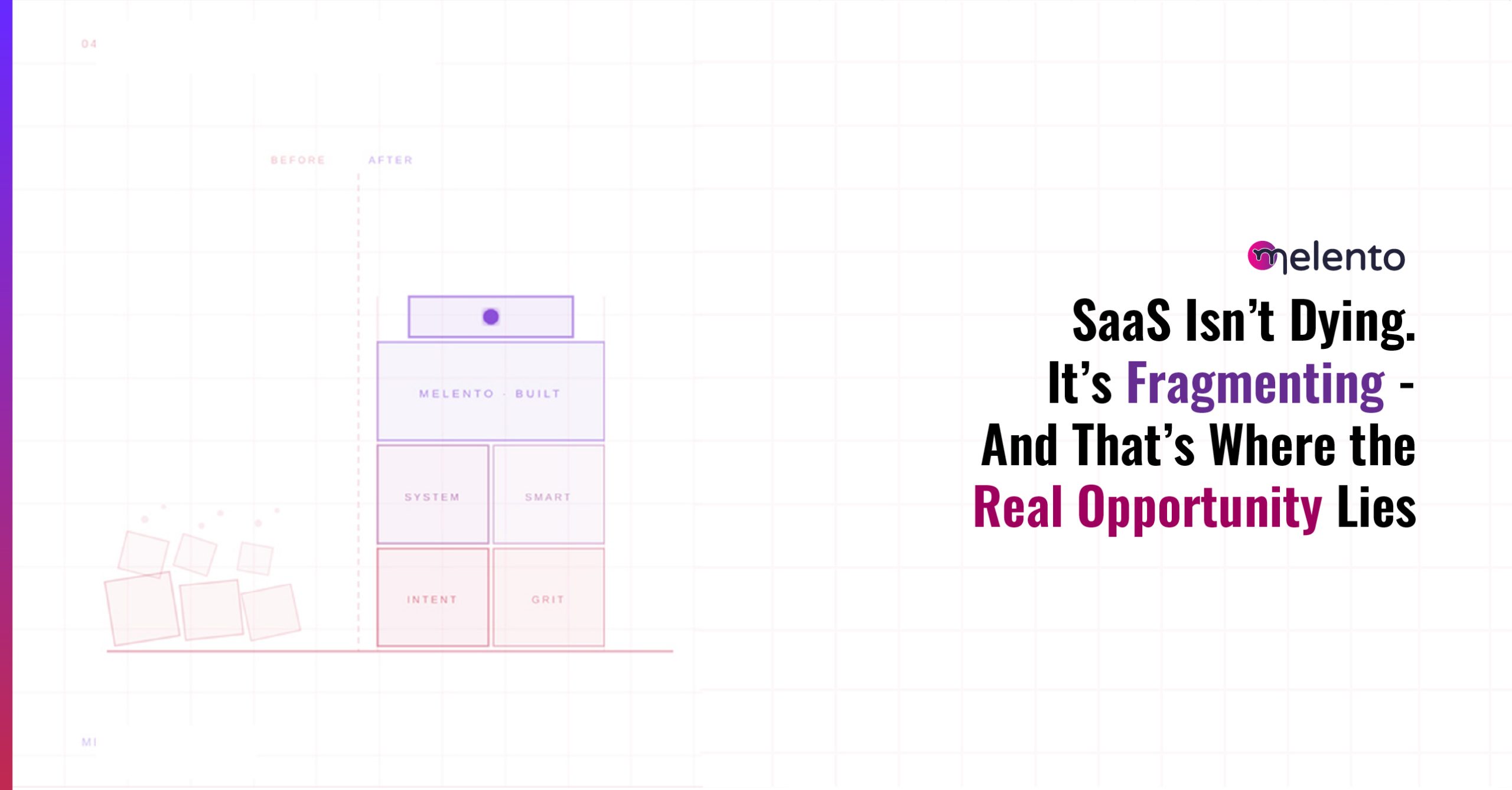
SaaS isn’t dying. It’s unbundling and what replaces it won’t be fewer products, but exponentially more.
We’re entering the era of micro-software.
From Generic to Specific Software
For the last decade, SaaS growth was driven by aggregation. Platforms expanded horizontally—adding features, bundling workflows, and steadily increasing ARPU(Average Revenue Per User). The winning strategy was to become the “all-in-one” system of record.
AI disrupts that model—but not in a straight line.
The first phase is unbundling. AI dramatically lowers the cost of building software, enabling a wave of hyper-specific, micro-solutions designed to solve one problem exceptionally well. Instead of a full analytics suite, a company might pay $10/month for a tool that delivers a daily Slack digest of key metrics, anomalies, and recommendations—fully automated.
That’s not just a feature. That’s a product.
As these micro-tools proliferate, innovation accelerates. Teams experiment fast, stitching together multiple specialized solutions to optimize individual workflows.
But this creates a second-order effect: vendor sprawl.
Enterprises soon face tool fragmentation, rising integration overhead, security risks, and governance challenges. Vendor fatigue sets in. What started as flexibility becomes complexity. The natural response is consolidation.
This leads to the next phase: re-aggregation—but with a twist.
The winners won’t just be broad SaaS platforms adding features for the sake of it. They’ll be companies that:
- expand thoughtfully across adjacent workflows
- integrate deeply rather than bundle superficially
- and shift toward outcome-based pricing instead of seat-based models
In this cycle, AI doesn’t kill platforms—it reshapes them.
Micro-software drives the initial disruption. Enterprise needs drive consolidation. And the enduring SaaS companies will be the ones that bridge both: delivering the precision of point solutions with the reliability and scale of platforms.
The rest will struggle to keep up.
The Economics Have Changed
Historically, software had to be “venture-scale” to justify its existence. High development costs, distribution challenges, and support overhead meant products needed large TAMs.
AI collapses those constraints.
- Development costs are down 60–80% with AI-assisted coding
- Time to MVP has reduced from months to days
- Customer acquisition is increasingly organic via marketplaces and integrations
This fundamentally changes what’s viable.
A product serving just 5,000 users at $10/month is now a $600K annual business—with minimal overhead. That was never attractive in the old SaaS world. Today, it’s a sustainable, profitable micro-business.
Multiply that by thousands of niche workflows across industries—and you start to see the scale of what’s coming.
Platforms Will Become Ecosystems, Not Products
The real winners in this shift won’t just be the micro-SaaS builders. It will be the platforms that enable them.
We’re already seeing this with ecosystems around tools like Slack, Notion, Shopify, and Salesforce. But AI will supercharge this dynamic.
Core platforms will become operating systems, while micro-SaaS products act as modular extensions.
Instead of buying one bloated tool, businesses will assemble their own stack of specialized micro-products – each optimized for a specific outcome.
This mirrors what happened in mobile apps.
No one uses a single “super app” for everything (outside a few markets). Instead, we rely on dozens of highly specialized apps. Software is heading in the same direction.
The Rise of the “Workflow Entrepreneur
Perhaps the most interesting shift is who builds software.
You no longer need to be a traditional SaaS founder to create a product. Domain experts such as marketers, sales leaders, operations managers can now turn their workflows into software.
This creates a new category: the workflow entrepreneur.
Someone who understands a narrow pain point deeply, and uses AI tools to package that solution into a product.
For example:
- A RevOps leader building a pipeline hygiene automation tool
- A recruiter creating an AI-driven candidate screening assistant
- A finance manager offering a cash flow forecasting micro-app
These aren’t billion-dollar startups. But collectively, they represent a massive economic layer that didn’t exist before.
Where Melento Is Leaning In
At Melento, we’re actively building for this shift. Instead of approaching enterprise software as a monolithic layer, we’re rethinking it as a network of intelligent, outcome-driven micro-solutions sitting on top of existing enterprise systems. Our focus is on enabling businesses to deploy lightweight, AI-powered modules that solve very specific bottlenecks – whether it’s accelerating contract cycle times, improving compliance visibility, or automating decision checkpoints without requiring a full system overhaul. More importantly, we’re designing Melento as a platform where such micro-capabilities can be rapidly created, tested, and scaled, either by us or by ecosystem partners. The goal is simple: move from “software that manages processes” to “software that continuously optimizes them in real time.”
What This Means for SaaS Companies
For existing SaaS players, this is both a threat and an opportunity.
The threat: feature commoditization. AI will make it easier for micro-products to chip away at core functionalities.
The opportunity: becoming a platform that others build on.
The question every SaaS CEO should be asking is not “How do we add more features?” but “How do we enable others to build on top of us?”
Because the future isn’t about owning the entire stack. It’s about owning the ecosystem.
AI won’t consolidate software into fewer players. It will do the opposite.
We’re heading toward a world where software is:
- More fragmented
- More specialized
- More accessible to build
- And more aligned to specific outcomes
SaaS isn’t dying. It’s becoming invisible, modular, and everywhere.
And the companies that understand this shift early won’t just survive – they’ll define the next decade of software.