What Is CLM Software and Why Is It Becoming Essential for Enterprises in Oman?
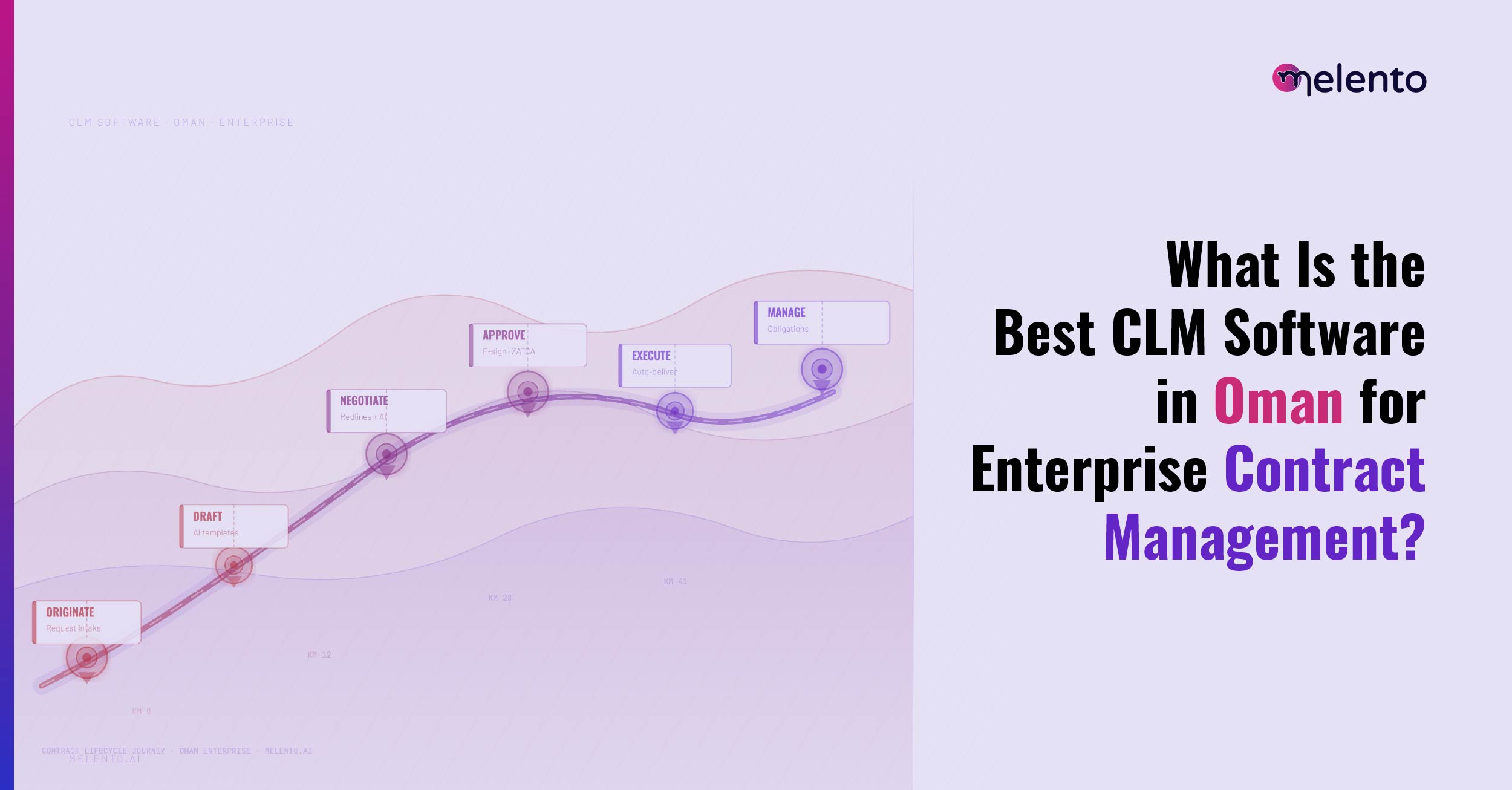
Contract Lifecycle Management (CLM) software is a centralized digital platform that automates the entire contract lifecycle, from initial request and drafting to negotiation, e-signature, and post-signature obligation tracking. In Oman, CLM is transitioning from a “luxury tool” to an “enterprise essential” as the Sultanate accelerates toward Oman Vision 2040.
Here is why it has become indispensable for Omani enterprises in 2026 and why enterprises must start looking out for the best CLM software in Oman:
- Enforcing the New Personal Data Protection Law (PDPL)
As of February 5, 2026, Oman’s Personal Data Protection Law is fully enforceable. CLM software is now the primary defense for Omani firms to avoid non-compliance penalties, which can reach up to OMR 500,000. So, Modern CLM platforms automatically audit contracts for data processing clauses, ensuring that explicit consent and data residency requirements (as set out in Royal Decree No. 6/2022) are baked into every vendor agreement.
- Driving the $3 Billion Digital Economy
With Oman’s digital transformation market projected to grow from $2.9 billion in 2025 to over $4 billion in 2026, enterprises are under pressure to “digitize or decline.” Omani conglomerates are migrating from legacy ERPs to cloud-native CLM architectures. This shift enables “Contract Intelligence,” in which AI analyzes contracts to prevent the annual loss in value typically caused by manual oversight.
- Talent Optimization
The Ministry of Transport, Communications, and Information Technology (MTCIT) has highlighted a digital skills gap in the local market. CLM software acts as a “force multiplier” for legal teams. By using pre-approved clause libraries and automated workflows, a small legal team can manage a volume of contracts previously requiring twice the headcount, allowing Omani talent to focus on high-level strategic advisory rather than administrative paperwork.
- Accelerating Government & Private Sector Synergy
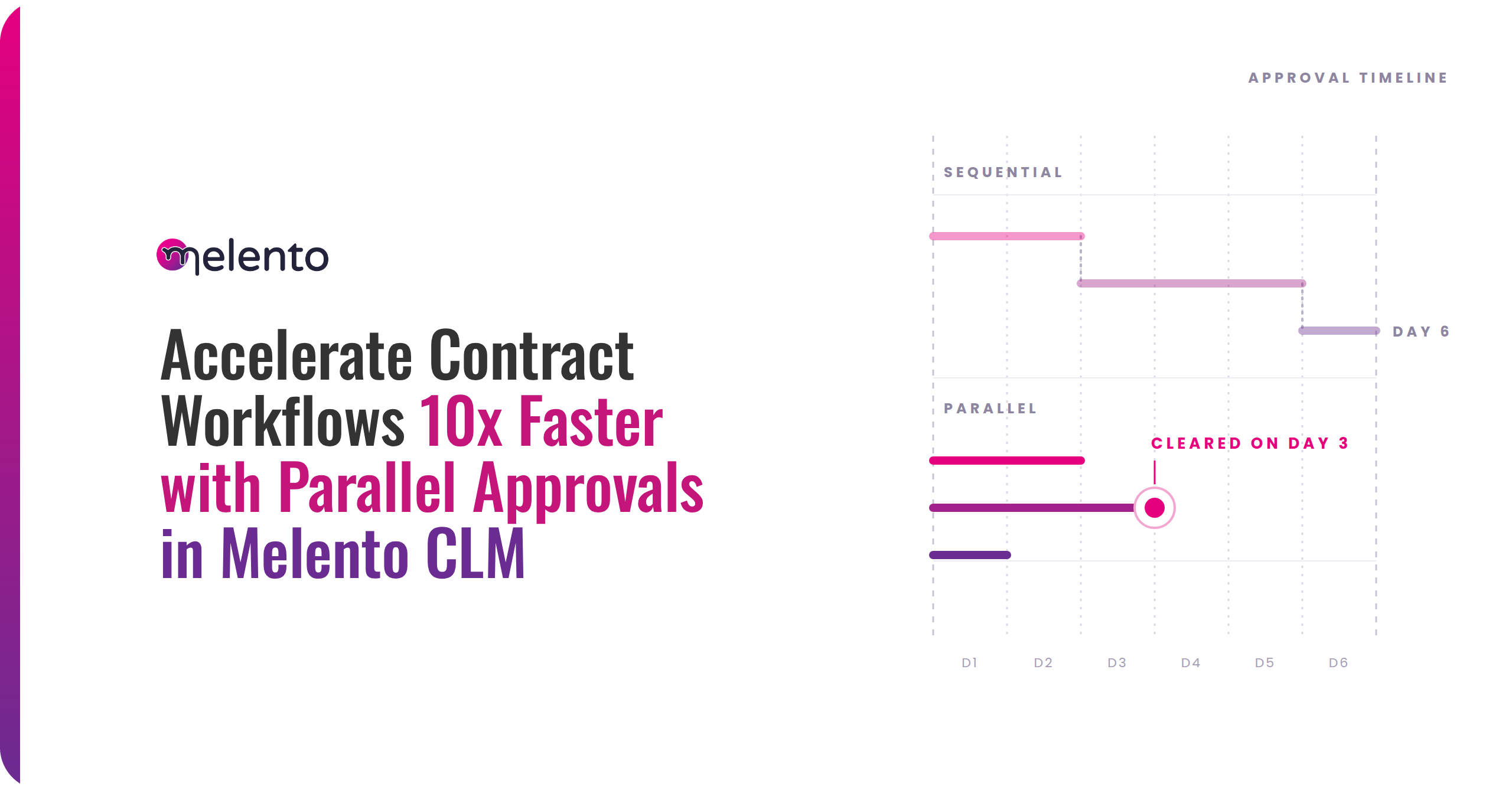
The Government Digital Transformation Program (Hasaad) has already automated over 80% of public services. For private firms bidding on government tenders or North Field-related projects, speed is the new currency. Enterprises using CLM in Oman report a 68% reduction in contract cycle times, enabling them to move from “Tender Won” to “Project Commencement” weeks faster than competitors using manual processes.
What Contract Management Challenges Do Enterprises in Oman Face?
Enterprises in Oman are navigating a rapid shift toward a digital-first economy. However, as of 2026, several localized bottlenecks persist, ranging from regulatory pressures to sector-specific operational leaks:
- The “Arabic-English” Linguistic Gap: Many Omani enterprises operate with bilingual contracts. A major challenge is the lack of “Contract Intelligence” tools that can accurately reconcile the Arabic and English versions, often leading to legal discrepancies in dispute resolution or arbitration.
- Project Delays in Infrastructure: An Omani construction and energy project highlighted that “late review and approval of documents” is among the top five causes of project delays. Without automated CLM workflows, the time required for internal legal and financial “Sign-offs” can extend project timelines by weeks, resulting in millions of OMR in cost overruns.
- Auto-Renewal & Procurement Blindspots: Most of the regional companies report they cannot locate at least 10% of their active contracts. In Oman, this visibility gap often results in “hidden” auto-renewals with international vendors, locking SMEs and large firms into unfavorable terms simply because the 90-day cancellation window was tracked on a static spreadsheet rather than an automated system.
- Shortage of Specialized Digital Talent: While the “Makeen” program aims to upskill 10,000 Omanis, a current shortage of Cloud Engineering and Data Science experts means many enterprises purchase advanced CLM software but struggle to integrate it with existing ERP systems such as SAP or Oracle.
What Features Should Enterprises Compare When Choosing the Best CLM Software in Oman?
When selecting a Contract Lifecycle Management (CLM) solution in Oman, enterprises must look beyond basic document storage. In 2026, the focus has shifted toward sovereignty, localized AI, and In-Country Value (ICV) metrics.
|
Feature |
Local Benefit |
|
Arabic-English AI |
Handles bilingual mandates for Omani courts and international partners. |
|
Sovereign Hosting |
Ensures data stays within Oman-based clouds (e.g., Oman Data Park). |
|
Obligation Tracking |
Critical for meeting localization and In-Country Value (ICV) targets. |
|
Audit Trails |
Provides transparent records for the State Audit Institution requirements. |
Below is the comparison of Top CLM Solutions in the Oman Market in 2026
|
Best CLM Softwares in Oman |
|||
|---|---|---|---|
|
CLM Software |
Best For in Oman |
Key Strengths |
Why It Matters for Oman |
|
Melento CLM |
Compliance-heavy enterprise automation |
Bilingual workflows, AI-automation, eSign-integrated, and governance automation. |
Ideal for regulated, bilingual enterprise ecosystems |
|
Icertis |
Governance-intensive enterprises |
Advanced compliance automation |
Strong for financial institutions |
|
DocuSign CLM |
Global enterprise integration |
Strong Integrations |
Strong for multinationals |
|
Agiloft |
Workflow customization |
Flexible automation logic |
Suitable for tailored enterprise workflows |
|
Ironclad |
Legal workflow efficiency |
User-friendly collaboration |
Useful for legal teams seeking usability |
|
Sirion |
Procurement governance |
Obligation and supplier tracking |
Relevant for large procurement ecosystems |
Melento CLM stands out in this landscape because it is engineered for the unique bilingual and regulatory environment of the Sultanate, bridging the gap between international software standards and local legal requirements.
How Does Melento CLM Solve Oman’s Contract Challenges?
Melento CLM is purpose-built to address the structural and regulatory complexities of the Omani market. By aligning its features with Oman Vision 2040 and the newly enforced Personal Data Protection Law (PDPL), Melento transforms contract management from a back-office task into a strategic advantage.
- Bilingual Mastery & RTL Sovereignty: Unlike global platforms, Melento offers native Right-to-Left (RTL) enablement. This is critical in Oman, where the Arabic version of a contract is legally binding in local courts. Melento ensures that dual-language workflows (Arabic-English) remain perfectly synchronized, preventing the legal discrepancies that can arise during ministerial or judicial reviews.
- Localized Compliance for PDPL 2026: With the Personal Data Protection Law fully enforceable as of February 2026, Omani firms face fines for data mishandling. Melento provides built-in compliance controls, including timestamped approvals and immutable audit logs, ensuring that every contract containing sensitive “Personal Data” is handled in accordance with the Ministry of Transport, Communications, and Information Technology (MTCIT) standards.
- Accelerating “Tahawul” (Digital Transformation): Oman’s National Digital Transformation Program achieved a 94% performance rate by the end of 2025. Melento supports this momentum through its API-first architecture, enabling Omani enterprises to seamlessly integrate contract data with existing national systems, such as the “Thiqa” digital identity platform, for secure electronic document signing.
- Driving In-Country Value (ICV) & SME Growth: Melento’s “Ask Sam” AI Search and intelligence dashboards allow procurement heads to instantly track ICV targets, ensuring that vendor contracts align with the Oman Investment Authority’s (OIA) mandate to prioritize local content and Omani-made goods.
- Mitigating Infrastructure “Value Erosion”: With Oman accelerating industrial projects, contract “leakage” is a major risk. Melento’s Centralized Intelligence Dashboards provide real-time alerts on delivery milestones and price-adjustment triggers, preventing the cost escalations that frequently plague large-scale engineering and construction projects in the Sultanate.
- Audit-Ready Governance for GVCs: For Government-Linked Companies (GVCs), transparency is non-negotiable. Melento offers Multi-level Approval Routing and “Permission-based Access,” creating a transparent record for the State Audit Institution. This ensures that every contract, from procurement to final sign-off, stands up to the highest levels of national fiscal scrutiny.
Melento CLM secures your compliance, automates your bilingual workflows, and ensures your enterprise is ready for the future of the Sultanate’s digital economy.