
Contract chaos isn’t caused by bad contracts; it’s caused by broken workflows.
It’s 6:30 PM. Sales is waiting on contract approval. Finance has flagged a clause change. Legal is searching emails for the latest version. Someone asks, “Has this been signed already?”
If this sounds familiar, you’re not alone. A contract management workflow is the structured process that governs drafting, approvals, negotiation, execution, and post-signing tracking of agreements across departments. When this workflow breaks, contracts fail; not because of the terms, but because of the process.
Manual handoffs, scattered approvals, version confusion, and last-minute compliance checks turn what should be a predictable process into daily chaos. That’s why workflow design has become a top priority for enterprises managing high-volume contracts.
But most resources stop at theory; they don’t really explain how to execute it.
This guide fills that gap and addresses the questions that teams are already searching for, such as:
- How to design a contract workflow
- Contract approval workflow automation
- CLM implementation steps
- Contract lifecycle automation best practices
- Legal operations contract optimization
Whether you’re setting up your first automated workflow or optimizing an existing one, these steps will help you turn chaos into control.
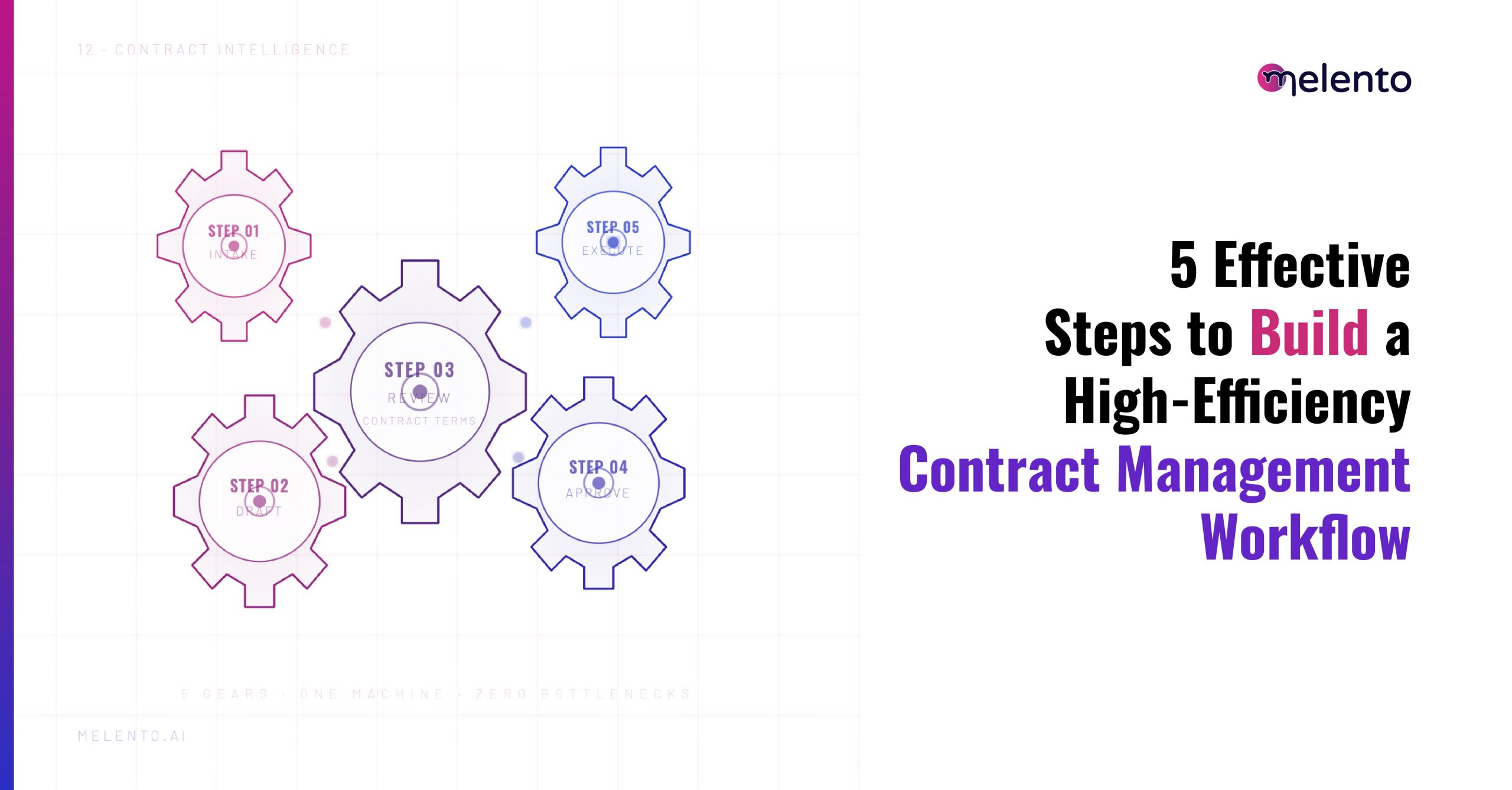
Let’s break down how to design a high-efficiency contract management workflow in 5 practical steps, and how modern CLM platforms like Melento make it executable.
Step 1: Standardize Before You Automate
|
The bottleneck: Contracts drafted from scratch, copied from old emails, or reused without controls lead to delays and inconsistent risk. What do high-efficiency teams do? They start with standardization.
This ensures every contract starts from a compliant baseline—no reinventing the wheel, no legal firefighting later. Where Melento CLM fits: Modern CLM platforms, such as Melento, implement this through governed templates and clause intelligence, ensuring that sales and business teams can initiate contracts without violating legal guardrails. |
Step 2: Automate Reviews and Approvals (Kill Email Chains)
|
The bottleneck: Approval requests scattered across email, WhatsApp, and verbal follow-ups. No visibility. No accountability. What do high-efficiency teams do? They implement rule-based approval workflows, such as:
Where Melento CLM fits: Melento embeds conditional approval workflows directly into the contract lifecycle, ensuring the right stakeholders approve the right contracts at the right time, with a complete audit trail. |
Step 3: Centralize Negotiation and Version Control
|
The bottleneck: Multiple versions named “Final_v7_REALLYFINAL.docx” are floating across inboxes. What do high-efficiency teams do? They move negotiations into a single system of record:
This reduces errors, accelerates negotiations, and preserves legal intent. Where Melento CLM fits: Melento maintains version control and negotiation history within the workflow, eliminating document sprawl and ensuring traceability. |
Step 4: Embed Execution Into the Workflow (Not After It)
|
The bottleneck: Contracts get approved, then stall while awaiting stamping, signing, or coordination across tools. What do high-efficiency teams do? They treat execution as part of the workflow:
Execution becomes the final step, not a separate project. Where Melento CLM fits: Melento combines CLM, eStamping, and legally valid eSign into one continuous flow, turning approvals into executed contracts in minutes, not days. |
Step 5: Track Obligations, Renewals, and Risk Post-Signing
|
The bottleneck: Once signed, contracts disappear until something goes wrong. What do high-efficiency teams do?
Contracts stop being static documents and become living business assets. Where Melento CLM fits: Melento’s post-execution controls ensure contracts remain visible, searchable, and enforceable throughout their lifecycle. This reduces missed renewals, penalties, and compliance gaps. |
Contract Lifecycle Automation Best Practices
To get the most from automation:
- Standardize contracts first; automation works best with consistent templates.
- Automate approvals and reminders to avoid delays.
- Centralize contract storage so everyone accesses the latest version.
- Use analytics and reporting to track risks, deadlines, and performance.
- Ensure compliance and security with proper access control and audit trails.
These practices reduce errors, speed up deal cycles, and improve visibility.
Why Legal Ops Teams Are Rethinking Contract Management Workflows
The goal is no longer “faster signatures.” It’s a predictable, compliant, and scalable execution.
A modern contract management workflow provided by Melento CLM:
- Cuts turnaround time by over 68%
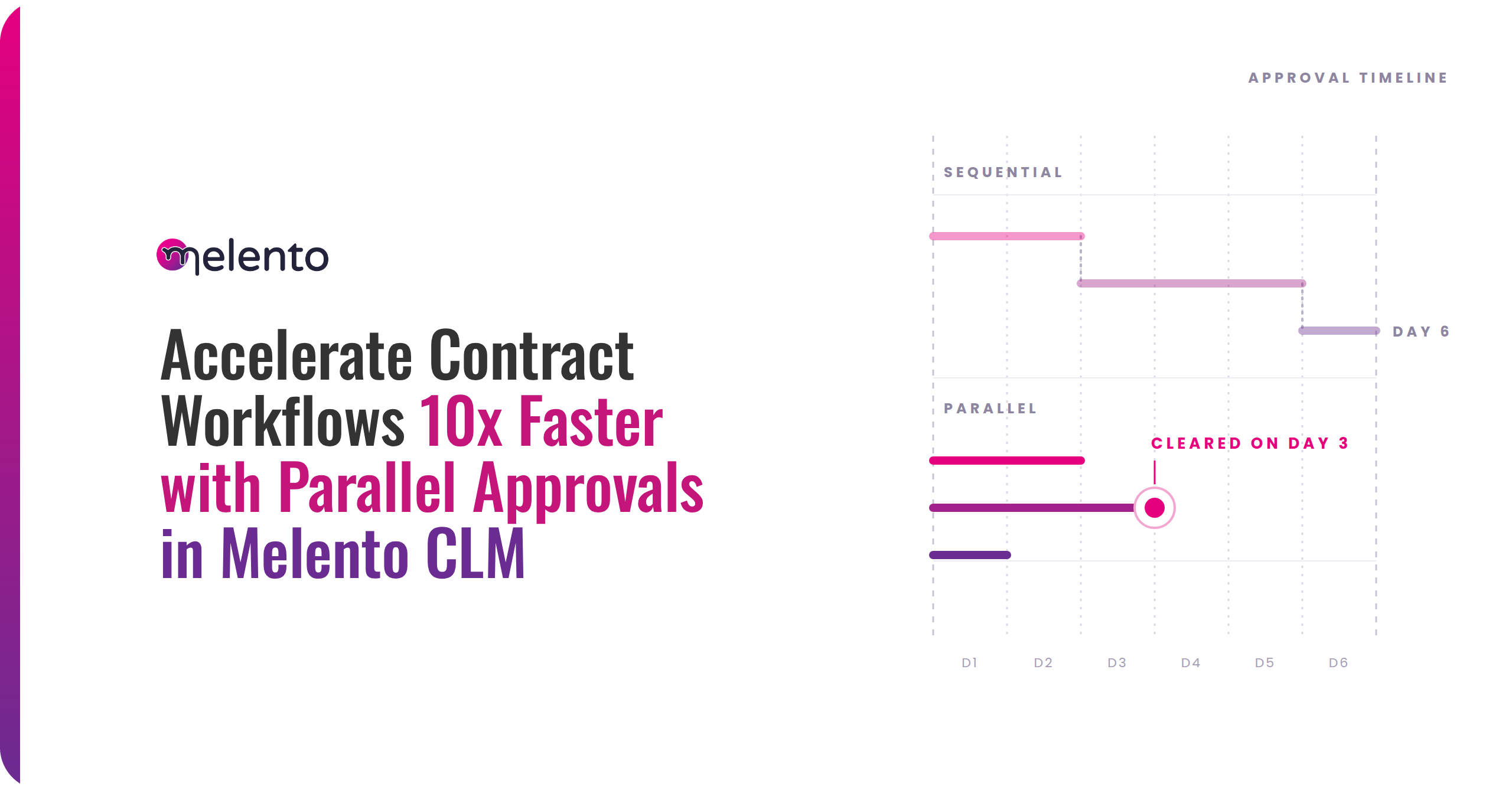
- Reduces approval friction
- Improves audit readiness
- Frees legal teams from operational noise
Final Thought: Workflow Is the New Competitive Advantage
Legal Operations leaders who invest in structured, automated contract management workflows aren’t just improving efficiency; they’re enabling the business to move faster, safer, and with confidence.
From drafting to execution to governance, they run the contract, don’t chase it. Explore how Melento CLM helps legal teams build contract workflows that scale.